*हिंदी में पढ़ें: इंट्राऑक्युलर प्रेशर (IOP) क्या होता है आंखों के दबाव की पूरी जानकारी
Intraocular pressure (IOP) or eye pressure refers to the fluid pressure inside your eye. When the fluid production and drainage remain in a balance, your IOP is considered to be normal. However, if the production and drainage are imbalanced, IOP may spike. A spike in the IOP raises the risk of optic nerve damage and subsequently glaucoma.
In this blog, we bring you all you need to know about intraocular pressure, what causes spikes in IOP, the risks it poses, and how to manage IOP levels.
Read more on:
ToggleWhat is Intraocular Pressure?
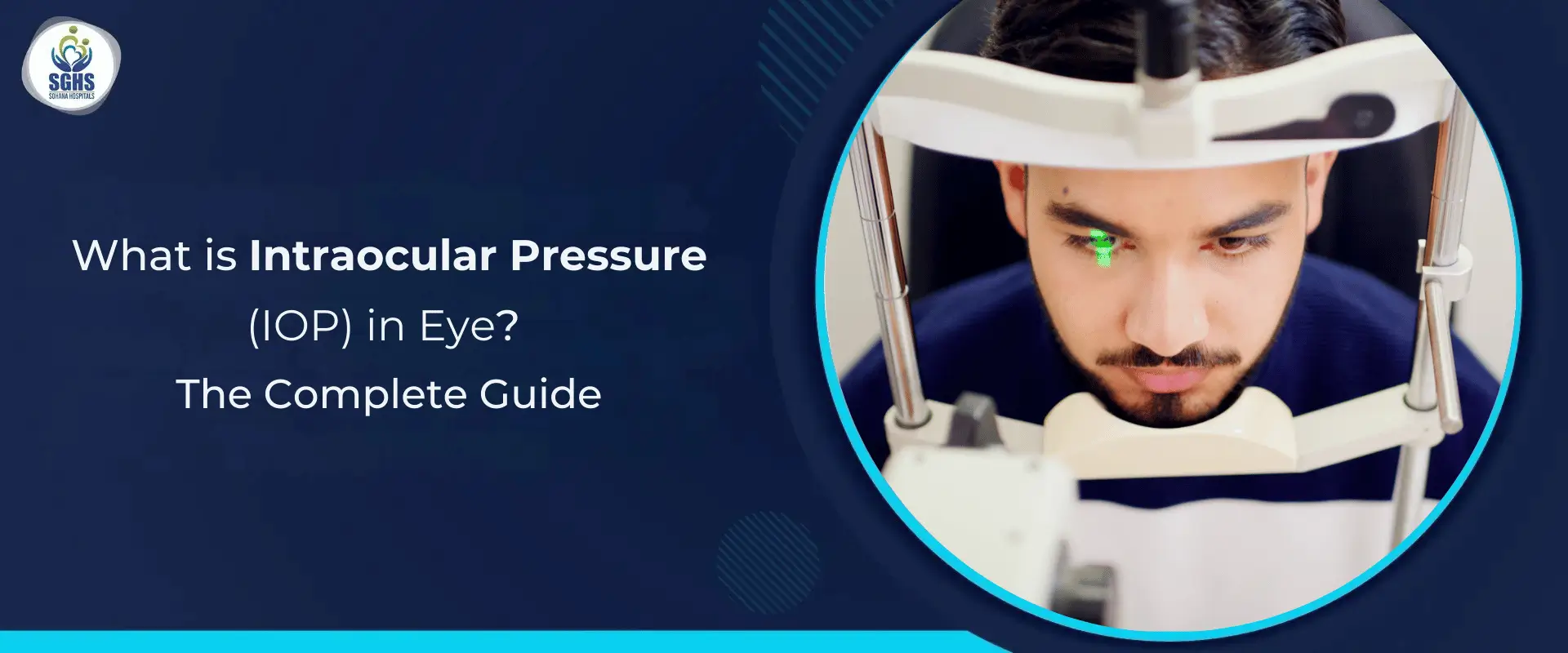
IOP is the fluid pressure in your eye. Your eyes produce a fluid known as aqueous humour. This fluid is produced to maintain the general health and shape of the eye, and it typically gets drained out through small channels by the edges of the cornea.
As long as the production and drainage remain in equilibrium, the pressure in the eye stays healthy. However, as soon as the balance changes, eye pressure can fall or rise. IOP is measured in mmHg (millimetres of mercury) during a tonometry eye exam. A “normal” reading may vary for different people; some optic nerves are more sensitive even at the presumably normal range of IOP, while others can tolerate high IOP levels without getting damaged.
👉Generally, 10-21 mmHg is considered the normal IOP range. Anything above 21 must be addressed promptly and evaluated by a retina/glaucoma specialist.
You can think of eye pressure as tyre pressure – you need enough to keep the eye’s optics and shape intact, but too much of it can cause strain and damage to the eye. Regular eye check-ups help prevent or slow down glaucoma progression by detecting eye pressure changes early.
High IOP Risk Factors (Glaucoma Risk Factors):
Annual check-ups are a must for “at-risk” individuals. Here are some risk factors that may make you more susceptible to IOP level spikes and glaucoma:
- Family history of glaucoma
- Age 40+
- Diabetes or high BP
- High myopia or hyperopia
- Previous eye surgery
- Eye injury
- Prolonged steroid medication use (tablets or eye drops)
What Causes High Eye Pressure and How to Reduce It?
High Eye Pressure Causes
IOP is not a fixed constant; it fluctuates much like the rest of the elements in your body. Most changes are harmless and small, but frequent or bigger changes matter if you fall in the at-risk category:
Lifestyle & Environmental Factors
Energy drink or strong coffee consumption, ties, tight collars, strenuous activity, etc., can briefly raise IOP levels. Contrarily, steady physical activity like cycling or walking, along with ample sleep, breaks from digital screen use, etc., can support healthy patterns.
💡 Note: These changes are usually temporary and do not cause glaucoma on their own.
Natural Variations in IOP
Some natural activities, like blinking, holding your breath, rubbing your eyes, lying flat, or bending down, can raise your IOP levels for a short time. Such changes can easily settle on their own once you take deep breaths and sit up.
Medical Conditions
Certain health issues, like diabetes and hypertension (high blood pressure), can negatively impact the eye’s vessels and fluid balance. Other conditions like thyroid eye disease, sleep apnea, uveitis, previous eye surgery, or injury can also alter IOP levels.
How to Reduce High Eye Pressure?
You can lower your intraocular pressure (IOP) through simple changes in daily habits and trusted medical treatments (if and when needed). The ultimate goal is to achieve a safe IOP level for your eye and maintain it in the long run.
Lifestyle Changes
- You can sleep with your head slightly raised to reduce nighttime pressure
- Stay hydrated (but avoid drinking too much water at once)
- Take regular screen breaks & relax your eyes
- Avoid wearing tight ties or collars
- Avoid holding your breath while lifting weights in the gym
Exercise & Dietary Changes
- Eat a well-balanced, nutritional, heart-healthy diet (leafy greens and foods rich in antioxidants)
- Practise regular aerobic exercises (walking, cycling, gentle yoga)
- Limit salt & caffeine consumption
Medical Treatment Options
- Eye drops
- Oral medication
If oral and topical medications prove ineffective, your ophthalmologist may suggest:
- Laser treatment (for high IOP-induced glaucoma)
- MIGS (for high IOP-induced glaucoma)
- Trabeculectomy (for high IOP-induced glaucoma)
Conclusion
A high IOP level must never be ignored. If left untreated, it could lead to glaucoma, a group of eye diseases also known as the silent thief of sight. Sohana Hospital boasts a diverse range of glaucoma treatments, based on the degree of your condition.
We have a team of expert glaucoma specialists who utilise state-of-the-art diagnostics and modern treatment facilities to provide the best high IOP and glaucoma care.
Get your IOP check-up today. Protect your vision for tomorrow.
Frequently Asked Questions
1. The full form of IOP?
The full form of IOP is Intraocular Pressure. It refers to the pressure inside your eye, maintained by the balance between aqueous humour production and drainage.
2. What is normal eye pressure?
10-21 mmHg is generally considered the normal range for IOP or eye pressure. Anything above 21 should be evaluated promptly by a glaucoma specialist. You must consult a glaucoma specialist if your test results indicate higher IOP levels.
3. Can too much screen time cause a spike in intraocular pressure?
No, digital eye strain or screen time primarily only causes dryness, irritation, and eye strain. IOP changes (if any) are typically negligible and temporary.