Cataracts refer to an eye condition that causes clouding and hardening of the eye lens that is otherwise clear and flexible. This happens due to the proteins inside the eye lens breaking down and clumping together into deposits. Cataracts are a natural part of ageing, affecting millions of people every year.
| 🌏 According to the WHO, cataracts are among the top reasons for blindness and vision impairment across the globe.[1] |
As daunting as that may sound, cataracts can actually be removed through minimally invasive procedures today. The surgery includes breaking down the cataracts through phacoemulsification and then replacing the natural lens with an artificial, biocompatible intraocular lens (IOL). The key is identifying the condition early.
While cataracts can affect people of all ages, your risk of developing the condition rises significantly after 40. For many individuals, clear symptoms may not show until the age of 60. Many don’t even notice the subtle warning signs until they start affecting their daily lives.
If caught early, cataract progression can be nipped in the bud (through surgical intervention), saving your eyesight. In this blog, we are going to explain some early signs you may not know are an indication of cataracts.
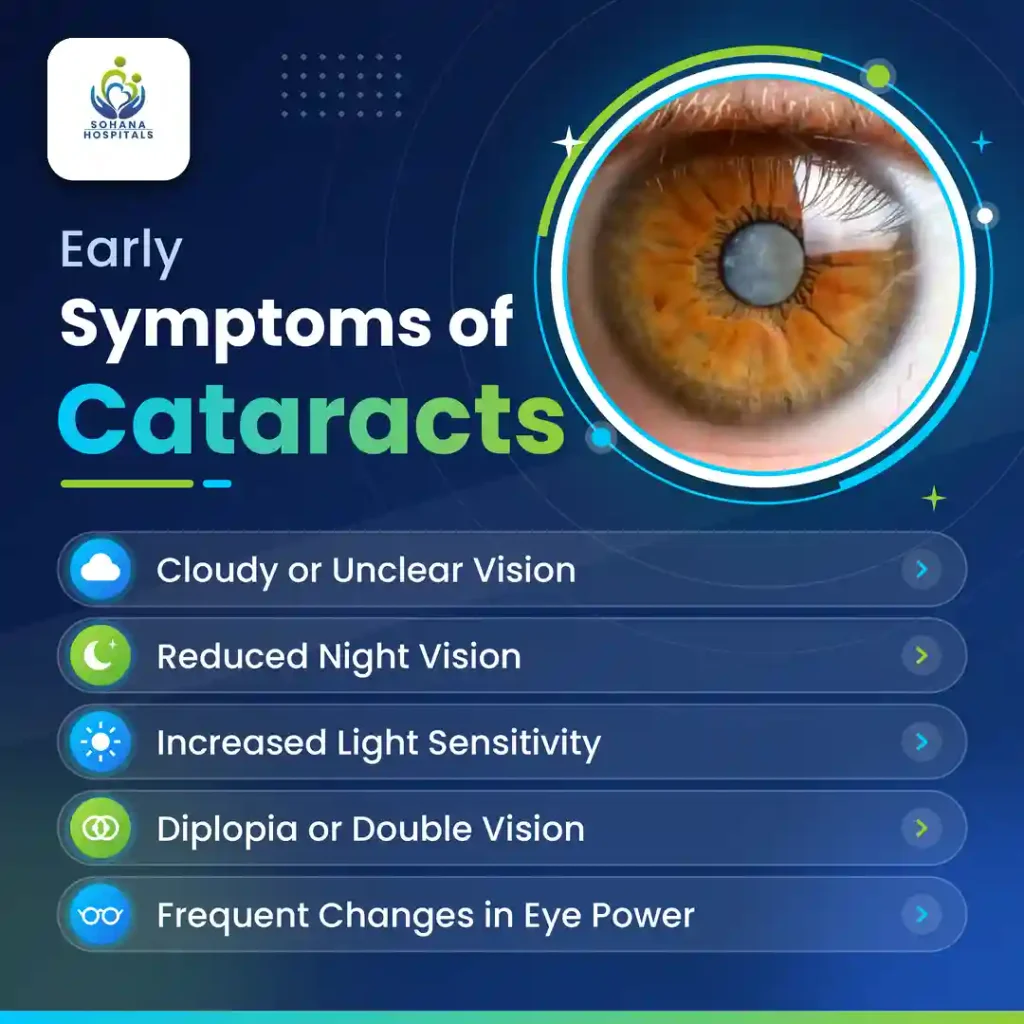
Some Early Symptoms of Cataracts
Here are some signs of cataracts every high-risk individual needs to be aware of:
Cloudy or Unclear Vision
Your vision may start appearing foggy or cloudy. Subtle spots and small aberrations in sight may start appearing. This can often be overlooked as an increase in eye prescription until it starts affecting your normal life activities.
If you notice a loved one (or yourself) starting to squint to see clearly or rubbing their eyes to make the cloudiness go away (more often than normal), it is advisable to get an eye assessment.
Reduced Night Vision
Cataracts often affect nighttime vision. This is because the hardened natural lens of the eye reduces the ability of light to enter the eye as easily. It feels particularly worse during the night because there isn’t enough natural light to compensate for this reduced ability.
Moreover, artificial lights at night (tube lights, ceiling lights, etc.) may irritate the eyes. Driving at night may start becoming more and more challenging.
Increased Light Sensitivity
Due to the clouding of your natural eye lens, it may become difficult to bear artificial, bright lights. Halos (around street lights, etc.) and glare (from cars’ headlights) may become common, so much so that excessively bright lights can even lead to headaches. This symptom is also more noticeable at night.
Diplopia or Double Vision
In some cases, cataracts can cause double vision (also known as diplopia). It’s when you start seeing 2 images of one object. If you notice this symptom and fall under the high-risk category, it may be time to consult a cataract specialist.
Frequent Changes in Eye Power
If you find yourself visiting your optician every few weeks for a change in your eyeglasses prescription, it may be wise to get checked for cataracts. This is because your eye power tends to fluctuate once you develop cataracts.
Discolouration of Natural Lens [NOT AN EARLY SIGN]
While this isn’t one of the earliest symptoms of cataracts, it is worth mentioning. When cataracts develop, they tend to cause discolouration in the natural eye lens, and you may notice the lens becoming increasingly opaque with time.
If you notice any of the above-mentioned signs of cataracts (in yourself or in your loved ones), a consultation with a good cataract doctor might help you get started on your vision restoration journey.
With advancements in cataract surgery today, some technologies offer a stitchless, injection-free, and blade-free surgical experience. Customisable IOL options are designed to help you get the right fit for your unique visual requirements.
Reference Sources
- World Health Organization. https://www.who.int/news-room/fact-sheets/detail/blindness-and-visual-impairment. Blindness and vision impairment
Medically Reviewed by
Dr. Amanpreet Kaur (COO – Senior Cataract & Refractive Surgeon at Sohana Hospital)
- MBBS, D.O.M.S (Gold Medalist), FICO
- 20+ Years of Experience in Refractive & Cataract Surgeries