*हिंदी में पढ़ें: सर्दियों में आँखों की सुरक्षा कैसे करें: 8 असरदार टिप्स
Falling temperatures and dryness in the air during winter can bring discomfort to your eyes. Eyes may feel dry, irritated, itchy, or red. Here we present 8 simple winter eye care tips to resolve the problem of dry eyes, and help maintain eye comfort even during the peak winter season.
What Makes Winter Eye Care Important?
Winter means cold weather and dry air, along with increased use of indoor heating appliances like heaters and blowers. And not to forget screen use, which has become an indispensable part of our lives.
All these factors come together to strip your eyes of their natural moisture content. This may make eyes feel red, sore, itchy, and irritated. Additionally, the winter season may lead to worsening of existing eye infections and allergies.
Good winter eye care helps maintain the tear film. This, in turn, protects your eyes from germs, dust, and pollutants so that you do not experience eye irritation or blurry vision. It also offers protection against mild eye injuries.
Follow these expert winter eye care tips and keep your eyes bright, healthy, and comfortable throughout the winter season.
Top 8 Winter Eye Care Tips
Small changes in habits can translate into huge comfort and protection for your eyes. Make the following a part of your lifestyle.
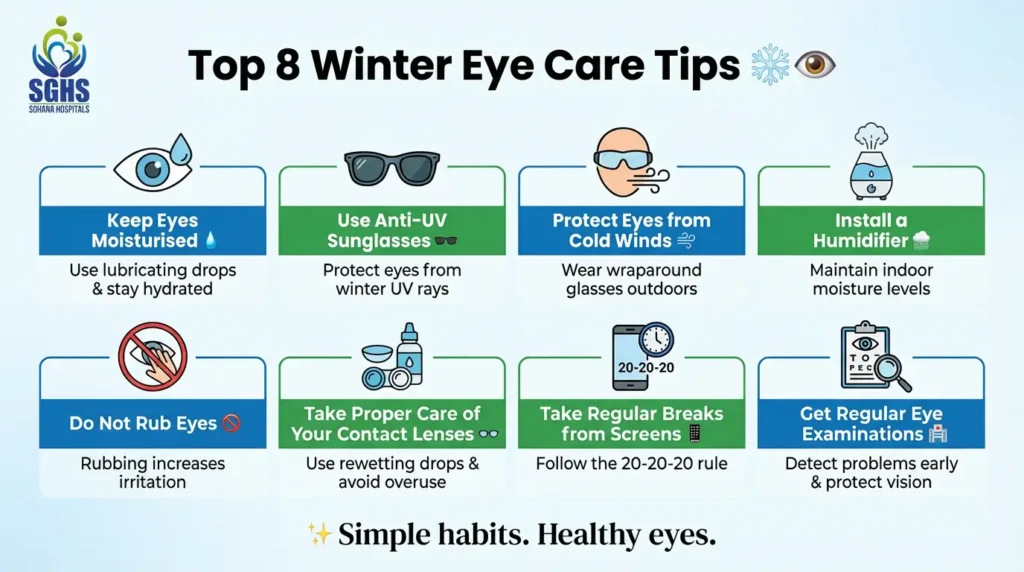
1. Keep Eyes Moisturised
You take care to moisturise your skin, but what about your eyes? Firstly, winter air is often cooler and drier. Secondly, heater and blower use increases during colder months. While they do help maintain optimum and comfortable temperature indoors, they take away natural moisture from your eyes. The result? Itchy, dry, red eyes!
So, what you can do is limit the use of heaters and blowers and maintain a proper distance from them. Drink at least 8-10 glasses of water daily to keep eyes hydrated. You can also use lubricating eye drops.
2. Use Anti-UV Sunglasses
You may want to bask more in the winter sun, but during winter too, your eyes may get exposed to harmful UV rays. Opt for sunglasses to block out UV rays. Check that these protective glasses fit you well. Wear them whenever you are outdoors in the sun.
3. Protect Eyes from Cold Winds
Cold winds cause eyes to dry out quickly. Wear wraparound glasses when outdoors. This will help control evaporation of natural tears while also offering protection against dust, cold air, and other pollutants.
If you ride a two-wheeler, it is even more important to prevent red, sore, itchy eyes. Also, if you participate in any winter sports like trekking or skiing, wraparound eyeglasses are a must.
4. Install a Humidifier
Heating appliances like heaters and blowers may impact humidity levels indoors. What you can do is use a humidifier at your home and workplace. This will help maintain your eyes’ natural tear film. This addition can bring much-needed respite to your eyes.
5. Do Not Rub Eyes
What do you do when your eyes feel itchy? The most natural instinct is to rub them. However, what you may not know is that rubbing may intensify irritation and also lead to minor scratches on the cornea.
If using lubricating eye drops does not help, do seek professional help from a trusted eye specialist. It will help protect your eyes from avoidable eye injuries.
6. Take Proper Care of Your Contact Lenses
Not only your eyes but also contact lenses tend to turn dry in cold or heated areas. Make use of rewetting drops and clean them as per directions to avoid eye irritation. Apart from this, avoid sleeping in contact lenses and try to use spectacles in between to give your eyes a break. This will allow them to regain natural moisture.
7. Take Regular Breaks from Screens
Try to limit your use of digital devices. If this is not possible, do follow the 20-20-20 rule – every 20 minutes, look at something 20 feet away for 20 seconds. An easy-to-follow practice, it helps relax the muscles of your eyes and prevents exhaustion.
Since digital eye strain also tends to worsen in winter, stay mindful to blink more often. Keep eye dryness and irritation at bay.
8. Get Regular Eye Examinations
Falling temperatures in winter may aggravate dryness in the eyes. In some cases, hidden eye problems may come to light. Getting your eyes checked regularly will help detect any eye infections, allergies, or other conditions early on – before they impact your vision.
It is rightly said that prevention is better than cure. Should you notice any redness in the eyes, excessive watering, or blurry vision, do consult an eye care provider.
Conclusion: Protect Your Eyes This Winter
Cold winter months may pose a testing time for your eyes, but the right winter eye care tips can help maintain good eye health. From limiting the use of heating appliances, taking frequent breaks from digital devices, and wearing protective glasses to using lubricating eye drops and getting regular eye checkups, it is all about being able to see clearly and without any discomfort.
Experiencing red eyes, watering, or eye irritation? Get in touch with expert dry eye specialists at Sohana Hospital. The most trusted eye care institution in North India, the hospital boasts a dedicated dry eye suite with the most advanced dry eye treatments, including Lipiflow and IPL therapies.
Your eyes require daily care. Just a few simple changes to your lifestyle, and you can enjoy the winter season without any eye discomfort.
FAQs on Winter Eye Care
1. What causes itchy eyes in winter, and how can I relieve them?
Causes for itchy eyes in winter include dry winter air and excessive use of artificial heating systems. This strips the eyes of their natural moisture and results in irritation. Apart from this, allergens like dust mites thriving in humid homes can lead to itching in the eyes.
To get relief from winter-related eye issues, you can try using artificial tears, protective eye glasses, and a humidifier. Also, avoid rubbing your eyes.
2. Why do I get watery eyes in winter, and what helps?
Watery eyes in winter may actually be a symptom of dry eyes. It may happen when eyes get dry due to cold winds blowing outside or low humidity indoors. This is common in dry climates. Apply warm compresses, use lubricating eye drops, and wear wraparound sunglasses outdoors for relief.
3. How can I manage dry eyes in winter effectively?
Dry eyes in winter may lead to discomfort and blurred vision. Avoid using screens for long hours at a stretch. Alternatively, take short breaks by following the 20-20-20 rule. Develop a habit of blinking more often while using the screen. Opt for oil-based heaters or a humidifier to maintain moisture balance indoors. Use protective eyeglasses when outside.
4. What leads to red eyes in winter, and when should I worry?
Red eyes in winter are often due to irritation caused by dry air, wind, or allergens. If redness persists for more than a few days and is accompanied by pain or vision changes, you should consult an eye doctor. They will check for eye infection and prescribe medications if needed.
5. Are eye allergies in winter common, and how do I treat them?
Eye allergies in winter may flare up from indoor triggers like pet dander, mould, or dust. Symptoms (itching and swelling in the eyes) are similar to outdoor eye allergies. Keep windows closed during peak pollen times, keep your place clean, and use doctor-prescribed eye drops for fast relief.
6. Can eye infection in winter or swelling of eyes in winter be prevented?
Eye infections in winter spread via dry, cracked skin around eyes or shared towels (e.g. in gyms), while swelling of eyes in winter occurs due to fluid retention in cold weather or allergies. Wash hands frequently and avoid touching your eyes. Use cool compresses for swelling and seek medical help if symptoms persist.