*हिंदी में पढ़ें: मोतियाबिंद सर्जरी के लिए लेंस के प्रकार: सही IOL कैसे चुनें
Cataract is one of the most common age-related eye conditions that affects millions of individuals globally. The condition is associated with the natural eye lens getting opaque, making it hard for the patient to see clearly. It can affect one or both eyes.
Cataracts may start developing after the age of forty years, but symptoms may become noticeable post fifty.
Read more on:
ToggleCataract Treatment Options
Treatment options for cataracts comprise different invasive and non-invasive approaches. An appropriate treatment choice for you depends on the severity of your condition. Visual aids like anti-glare glasses, polarised sunglasses, and updated prescription glasses or contact lenses are non-invasive cataract management options.
For those in advanced stages of cataract, surgical treatment may be necessary. Currently, modern cataract surgery options like MICS, FLACS, and AI+Robotic cataract surgery, help patients regain clear vision with minimal discomfort.
The Role of IOLs
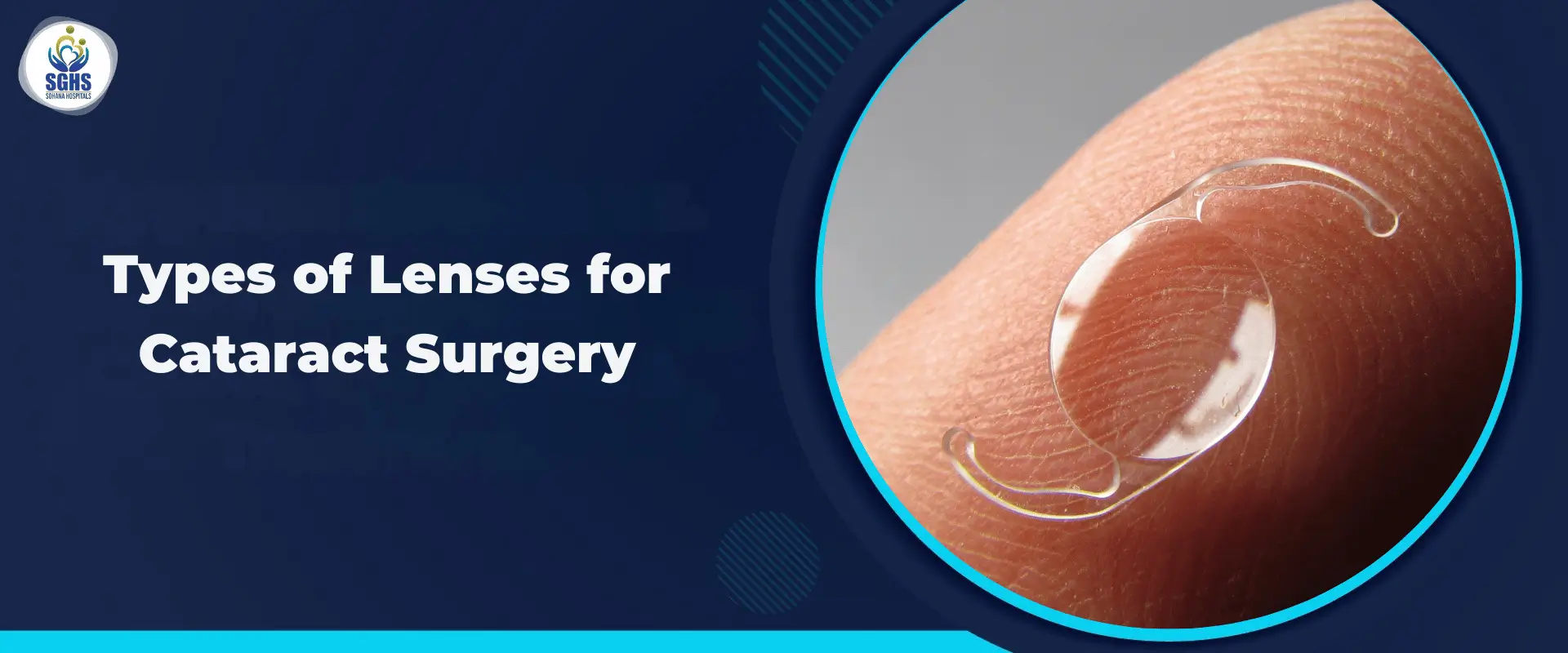
A cataract surgery involves replacing the natural eye lens with an artificial lens, also referred to as an intraocular lens. It’s the IOL implant that facilitates clarity in vision. IOLs can be of different types. And one might wonder – which IOL to choose for their cataract surgery?
In this blog, we intend to familiarise you with various types of lenses for cataract surgery.
Types of Lenses for Cataract Surgery
1. Monofocal Intraocular Lenses
These are the most common lenses used during a cataract surgery. They are characterised by a fixed focal length. With these lenses, you get clear vision for a particular distance, typically far.
They offer the benefits of affordability and clear distant vision. However, with these lenses, you may need glasses for close and intermediate vision.
2. Advanced Monofocal Intraocular Lenses
Advanced monofocal lenses give you a slightly higher range of visual clarity. Patients choose advanced monofocal lenses for their cataract surgery since these lenses deliver good far and enhanced intermediate vision clarity. However, you will still require glasses for up-close tasks.
With these, you may experience a reduced dependence on glasses for common tasks like computer work or cooking.
3. Multifocal Intraocular Lenses
These are high-end lenses that facilitate optimal vision at multiple distances. You can comfortably perform routine tasks like reading, cooking, and driving. However, they may have issues like glare and halos, and the brain may take some time to learn to adapt to them.
These lenses may eliminate your dependency on bifocals or progressive lenses. That is the reason patients opt for these premium lenses.
4. Extended Depth of Focus (EDOF) Lenses
Extended depth of focus (EDOF) lenses are a kind of multifocal lens that facilitate a continuous range of vision.
They offer the benefit of reduced side effects like halos and glare, and provide better visual clarity than normal multifocal lenses. However, you may still need reading glasses for close-up tasks.
*Read More: Monofocal vs Multifocal Lenses: Which One Is Right for Cataract Surgery?
Which Factors Decide the Type of Cataract Surgery Lens
Here are some aspects that help determine which artificial lenses you should choose for your cataract surgery:
- Lifestyle and occupation – whether you use computers frequently or often drive at night
- Personal preferences – if you want total freedom from glasses, or do not mind reading glasses
- Eye conditions – if you have glaucoma or astigmatism as well
- Previous eye surgery – if you underwent any eye procedure in the past
- Affordability – your budget and insurance considerations
At Sohana Hospital, the best hospital for cataract surgery, you get to choose from a range of advanced cataract surgery options, all of which are totally safe, painless, use no injection, and offer fast recovery.
You also get the best advice from our cataract specialist eye surgeons on the right cataract treatment and the type of cataract surgery lenses most suitable for you.
Get your cataracts treated well in time, and see clearly all your life.
Frequently Asked Questions
- Which lens is best for cataract surgery?
The best type of IOL for cataract surgery depends on your eye health, lifestyle, and specific vision needs. Monofocal lenses are typically ideal if you want clear distance vision. However, you may still need to wear reading glasses with these lenses.
Advanced monofocal and multifocal lenses, on the other hand, provide better visual range and a reduced need for glasses. Your cataract surgeon will help you decide on the best option suited to your unique eye requirements.
- What is the difference between monofocal, multifocal, and EDOF lenses?
Monofocal lenses only offer clear vision at a specific distance (generally far). Multifocal lenses provide clear vision at various distances, but may lead to halos, glare, etc. EDOF lenses provide a continuous range of vision and minimal side effects.
- Will I need glasses after cataract surgery?
If you choose to get multifocal or EDOF glasses, you will not require glasses for most tasks, since they provide clear vision at multiple distances. If you get monofocal lenses, you will need to wear reading glasses for close-up tasks.
- Are advanced monofocal lenses effective?
Yes, advanced monofocal lenses give sharper distance vision and enhanced intermediate vision. They are ideal for most daily tasks like cooking, digital screen use, driving, etc. They offer better visual outcomes and comfort than traditional monofocals.
- How do I choose the best cataract lens for me?
Choosing the best IOL depends on factors such as your lifestyle, occupation, your preferences when it comes to wearing glasses, past eye surgeries, and your budget. A cataract specialist will help you better understand your optical requirements and recommend a suitable option.
- How long do cataract lenses last?
IOLs typically last for life and do not need to be replaced. And if you maintain a healthy lifestyle, it will further ensure good eye health over the years.
- Are premium lenses worth the extra cost?
It depends on your condition and the kind of lifestyle you want to lead. To exemplify, multifocal lenses may prove to be worth investing in if you want to eliminate the need for glasses and get clear vision at all distances.
- Is surgery performed differently based on which cataract lenses I choose?
While the basic surgical steps are typically similar in all kinds of intraocular lens implantation surgeries, certain lenses, like multifocal lenses, may require additional planning and higher precision for accurate alignment.