Conventional cataract surgery served as a worthy cataract removal option, but it came with bigger incisions and a longer recovery period. The all-new Unity of 4 – 4D cataract surgery – now available at Sohana Hospital – brings a new level of control and precision. This advanced technology revolutionises how cataract surgery is performed.
The term ‘4D cataract surgery’ refers to the integration of real-time monitoring, pressure control, temperature regulation, and precision imaging technologies.
Unlike traditional cataract surgery that relied heavily on manual techniques, 4D cataract surgery employs real-time monitoring for precision like never before. The ‘4D’ label is not just a marketing gimmick – it’s an indication of the technology’s capacity to function across multiple aspects of surgical control.
Some features that make the technology stand out include – Intelligent Fluidics, Thermal Sentry Monitoring, and 4-dimensional phacoemulsification. 4D cataract surgery’s precision ensures there’s minimal tissue damage during the procedure.
Additionally, this advanced technology involves tiny incisions of just 1.6-2.2 mm. This is negligible compared to the 6-7 mm incisions made in old technologies (such as extracapsular cataract extraction). A smaller incision leads to minimal tissue trauma and faster visual recovery.
4D Cataract Surgery Features
This modern technology boasts plenty of unique features that make it stand out as a worthy contender in the cataract surgery sector. This advanced surgery combines the benefits of Active Sentry (Centurion Vision System), IOLMaster 700, LenSx, and Callisto System.
Intraocular Pressure Control
4D cataract surgery comes with cutting-edge intelligent fluidics technology. This allows for live tracking and intraocular pressure adjustments during the surgery. By keeping eye pressure at an ideal level, the surgery protects the eye’s sensitive parts during the cataract removal process.
Thermal Sentry Monitoring
The Active Sentry feature allows for real-time incision temperature monitoring. By regulating heat levels at the incision site, the technology protects your corneal endothelium (layer of cells on the posterior corneal surface).
4D Phacoemulsification Technology
The 4D phacoemulsification technology delivers controlled ultrasound energy to break down cataracts without causing excessive collateral tissue damage.
Benefits of 4D Cataract Surgery
4D cataract surgery helps patients achieve crystal clear vision. Individuals who choose the 4D technology are bound to recover much faster with better visual results than conventional methods.
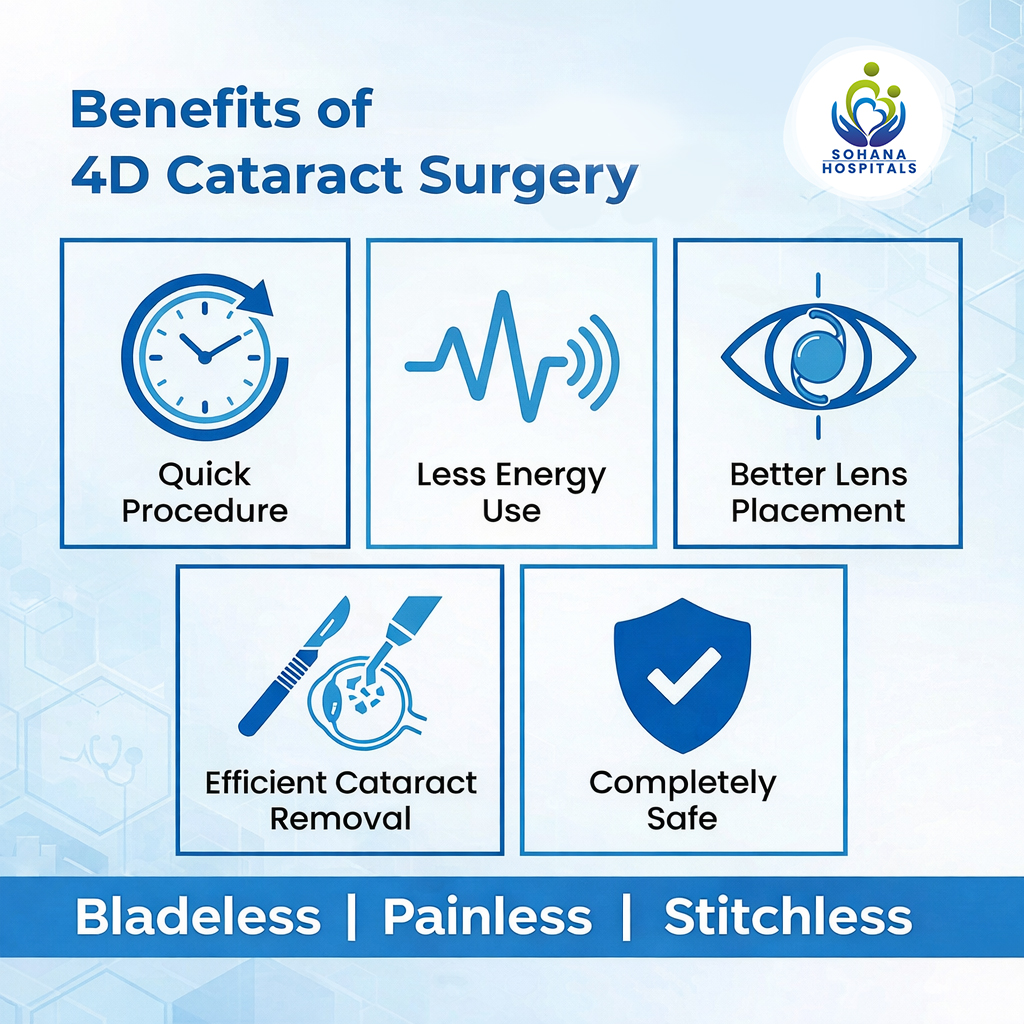
Quick Procedure
The 4D cataract surgery method removes the cataract nucleus much faster than old methods, cutting down the surgery time significantly. This increased surgical speed translates into minimal time spent under stress, while ensuring consistency in the level of precision.
Less Energy Use
A major plus point of this surgery is that it employs less ultrasound energy application on the eye during the procedure. Less energy application implies less heat-related harm to tissues. The benefits of reduced ultrasound energy include less pain, reduced swelling, and much faster healing.
Better Lens Placement
The precise control system of the advanced technology helps centre and precisely place intraocular lenses. This leads to improved post-op visual clarity and reduced dependence on specs.
Efficient Cataract Removal
The advanced 4D phacoemulsification technology allows for multidirectional motion, which helps in faster and more efficient nucleus removal.
Completely Safe
The procedure is a much safer alternative to old technologies. Constant intraocular pressure checks and incision heat regulation technology allow for a safe procedure with extremely low complication risk when performed by expert surgeons.
Bladeless, Painless, Stitchless
The procedure is completely blade-free, as it uses a femtosecond laser to create the incision. Numbing eye drops help make the procedure completely painless. Additionally, since this is a minimally invasive procedure, it does not require any sutures to help the eye heal.
Difference Between 4D Cataract Surgery & Conventional Cataract Surgery
Here’s a concise look at the difference between the two technologies:
| BASIS OF DIFFERENCE | 4D CATARACT SURGERY | CONVENTIONAL CATARACT SURGERY |
| INCISION | 1.6 – 2.2 mm | 6 – 7 mm |
| SURGERY TIME | 50% faster | 45 mins – 1 hour |
| ULTRASOUND ENERGY USE | 41% less | Standard level |
| PRESSURE CONTROL | Automated intelligent fluidics control for maintaining stable IOP | Manual |
| TEMPERATURE REGULATION | Automated thermal sentry monitoring | Basic observation |
| RECOVERY TIME | 3-7 days | 2-4 weeks |
| PAIN & DISCOMFORT | Minimal post-op discomfort | Significant post-op discomfort |
| VISUAL RECOVERY | Quick – within days | Slow – takes weeks |
| ROUTINE ACTIVITIES | 1-2 days | 2-3 weeks |
Why Choose Sohana Hospital for 4D Cataract Eye Surgery?
Sohana Hospital boasts a team of the best cataract surgeons in Chandigarh, backed by decades of experience and cutting-edge technology. A blend of modern diagnostic tools, the latest treatment options, and stringent quality protocols ensures you get the best cataract care at the most affordable prices.
Additionally, the hospital also accepts all major government and private insurances, making affordable eye care accessible to all.
Frequently Asked Questions
1. What is 4D cataract surgery?
4D cataract surgery is an advanced and precise cataract removal surgery. The procedure employs less ultrasound energy and ensures minimal tissue damage, efficient cataract removal, and accurate lens placement.
2. What is the 4D cataract surgery cost?
The cost of 4D cataract surgery depends on a number of factors. Primarily, aspects like the severity of cataracts, the expertise of the surgeon, and the credibility of the hospital play a significant role in determining the final cost of the surgery. Sohana Hospital accepts all government and private insurances, making the best cataract treatment accessible to all.
3. What is the 4D cataract surgery recovery time?
Initial visual recovery begins as early as 24-48 hours after the surgery. Many patients report visual improvement immediately after surgery. You can start your routine activities in just 3-5 days after the procedure. Since this advanced technology causes minimal tissue damage – it comes with a quicker recovery time as compared to conventional cataract surgery.
If you or anyone you know has been diagnosed with cataract,
stop delaying treatment – visit Sohana Hospital today!