Keratoconus is an eye condition in which the eye’s cornea (the clear front layer of the eye) becomes thin and gradually bulges outward to form a conical shape. This often leads to blurred or distorted vision, since it changes how light enters the eye.
The good news? You can manage keratoconus, especially when detected early.
If you’re looking for the “best treatment for keratoconus”, there is not one single “best” treatment for this progressive disease. Why? The right treatment depends on how early keratoconus is detected and how fast it is progressing.
Symptoms of Keratoconus
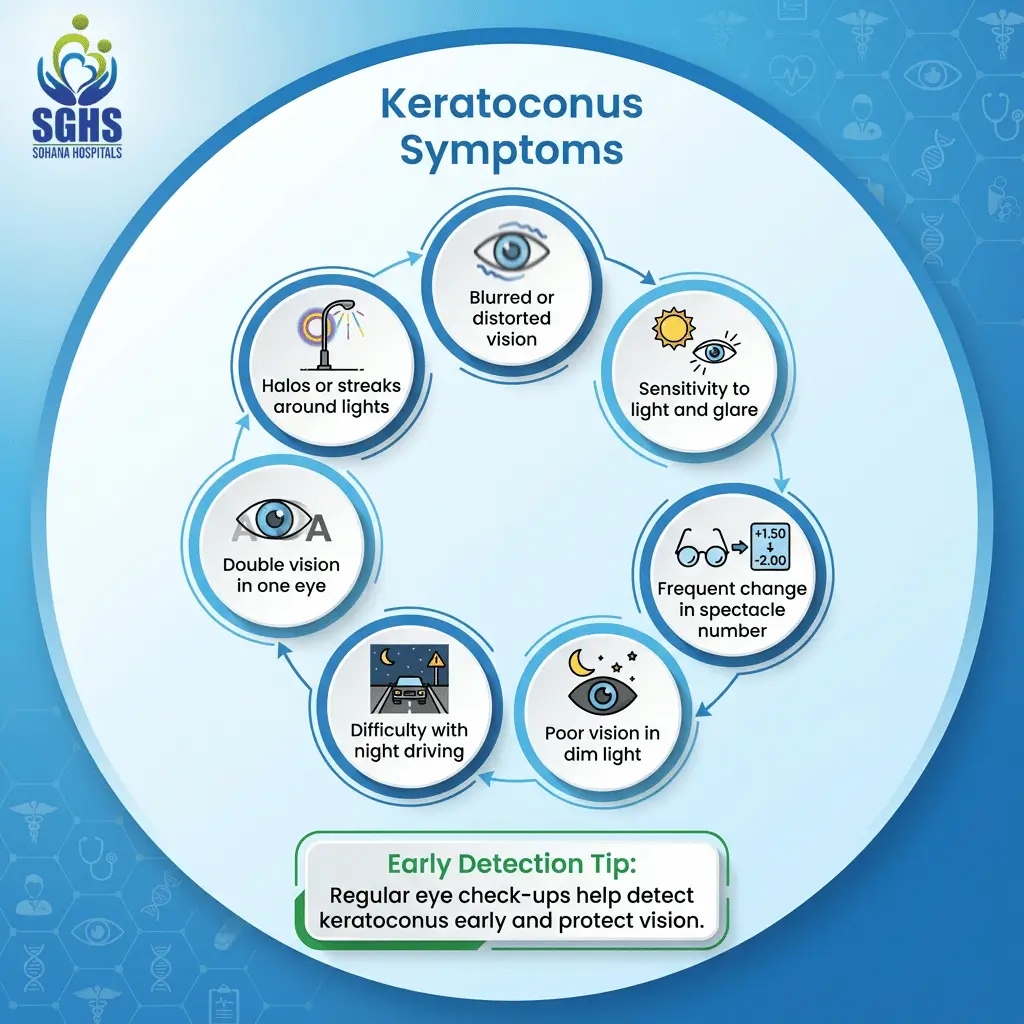
Keratoconus impairs the cornea’s ability to properly focus light. This results in vision problems that continue to worsen over time.
In the early stages, keratoconus may have mild symptoms, which people may assume to be refractive errors. It’s vital to recognise early signs, since it can help with the timely detection and treatment of the condition.
By staying watchful, one can slow down keratoconus progression, save vision, and enhance their overall quality of life. Here are some usual keratoconus symptoms:
- Things appear hazy, stretched, or unclear
- Discomfort from bright light or glare
- Specs prescriptions changing more often than normal
- Difficulty seeing in dim light conditions
- Challenging to drive at night
- Double vision in one eye
- Seeing streaks or rings around lights, especially at night
How to detect keratoconus early? Get regular eye check-ups.
Keratoconus Treatment Options
There are many different ways of treating keratoconus. Which treatment your eye specialist suggests to you depends largely on how severe the condition is.
Treatment options include spectacles, special contact lenses, CAIRS Surgery, C3R or Corneal Cross-Linking (CXL), Intracorneal Ring Segments (INTACS), and, lastly, Corneal Transplant (DALK/PK).
Sohana Hospital, Mohali, offers all the treatment options for keratoconus, from specs in the early stages to corneal transplant in the advanced stages.
Early Stage Keratoconus: Glasses or Contact Lenses
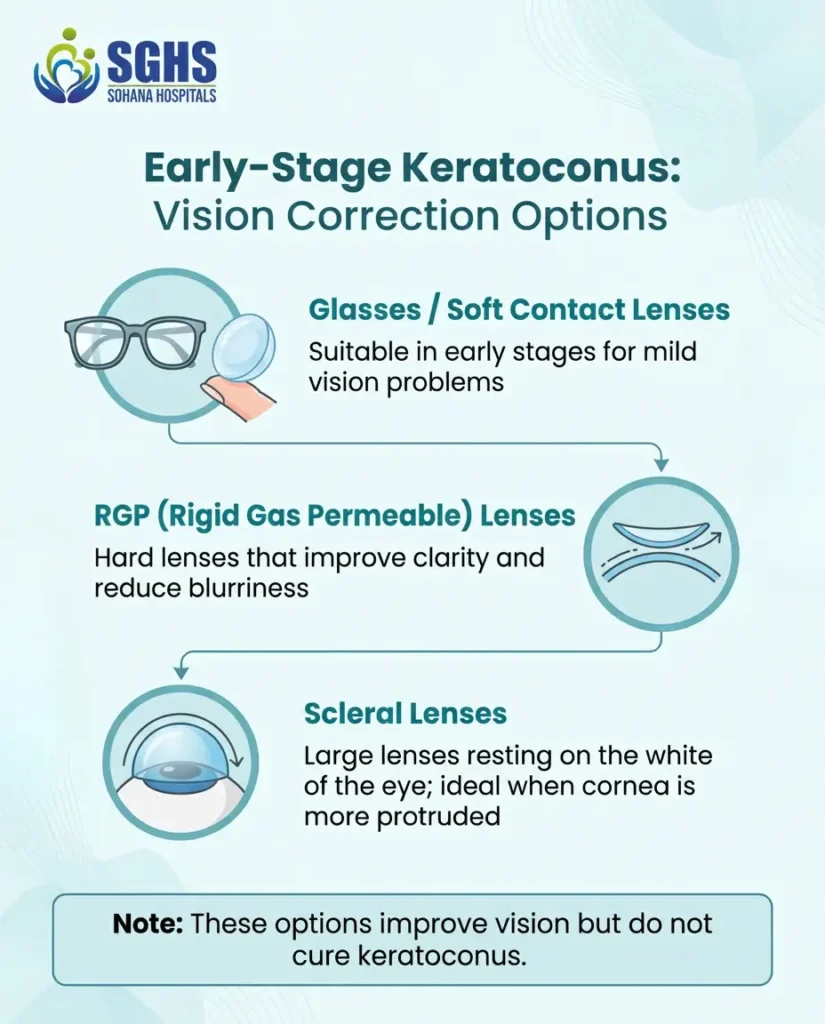
In the initial stages, keratoconus can generally be managed with spectacles or soft contact lenses.
As the condition progresses, special contact lenses (rigid gas permeable – RGP or scleral lenses) may be needed to provide better vision. Although these lenses do not cure keratoconus, they help improve vision significantly.
RGP or Rigid gas permeable contact lenses – These are hard contact lenses designed to fit over the distorted cornea. They help overcome light sensitivity and blurriness to a huge extent.
Scleral Lenses – If the cornea becomes too protruding, a hard contact lens may not be a feasible option. In such cases, scleral lenses may prove helpful. These lenses have a larger diameter, and they sit on the sclera (the white part of the eye) and do not touch the corneal surface. Comfortable to wear, they may give desired vision clarity to patients.
Progressive Keratoconus: Corneal Collagen Cross-Linking (C3R)
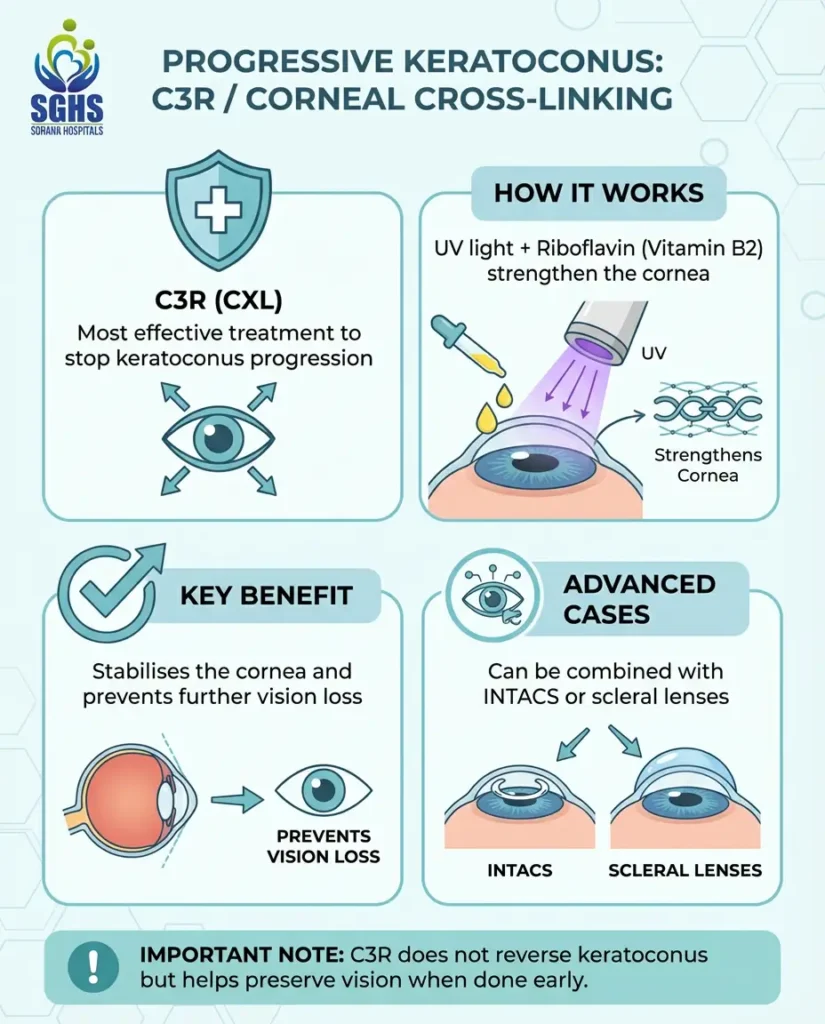
C3R or Corneal Cross-Linking (CXL): It is the most effective and scientifically proven treatment if keratoconus is progressing. It strengthens the cornea and helps stop further worsening of the condition.
C3R involves the use of ultraviolet (UV) light and riboflavin (vitamin B2) to boost the strength of the collagen fibres in the cornea, which promotes corneal stabilisation to improve vision.
A less invasive treatment option, C3R can also be used along with INTACS or scleral lenses in advanced cases of keratoconus.
Note: C3R does not usually reverse keratoconus, but it plays a crucial role in preventing vision loss. Early cross-linking can often help patients avoid more advanced procedures later.
Moderate to Advanced Keratoconus: Ring Segments or ICL
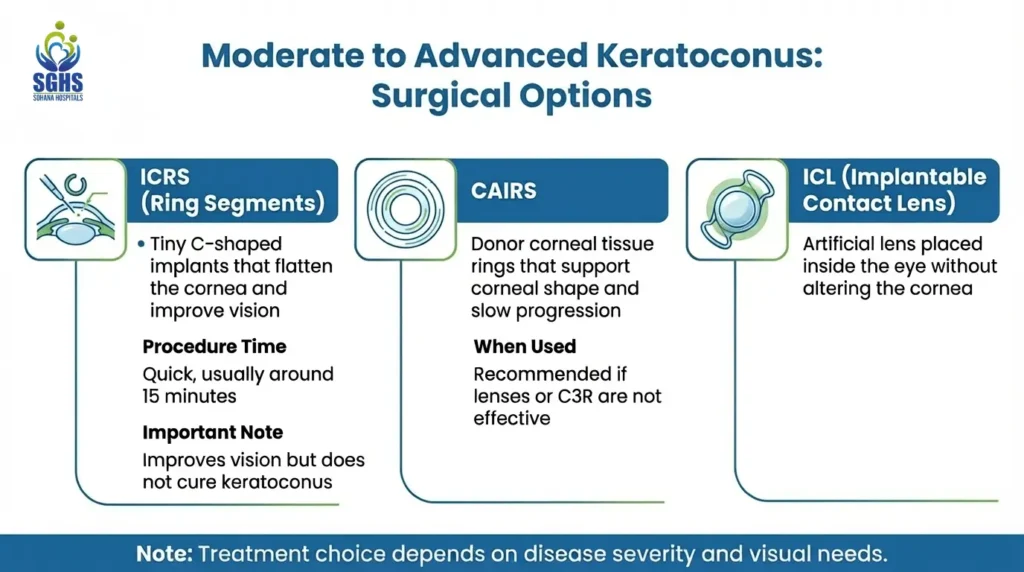
Intrastromal Corneal Ring Segments (ICRS) – It may be recommended to patients who are unable to achieve good vision with lenses. These tiny plastic, C-shaped ring implants help flatten the cornea and improve vision quality.
This procedure takes just about 15 minutes. However, if the condition is too severe, patients may still have to wear contact lenses for better vision.
Note: While implants are an effective treatment, they are not a cure for keratoconus.
CAIRS (Corneal Allogenic Intrastromal Ring Segments) – It’s an innovative surgery that involves the implantation of donor corneal tissue segments into the affected cornea. This technique gives structural support to the cornea to improve its shape, thereby enhancing vision and stopping keratoconus progression.
Note: CAIRS is recommended when other treatments like contact lenses or C3R (Corneal Cross-Linking) do not prove effective.
ICL (Implantable Contact Lenses): This procedure involves the surgical implantation of artificial lenses inside the eye to improve vision. The treatment does not modify the natural structure of the cornea. It may be a good alternative for those who are not fit for other keratoconus treatments.
Advanced Keratoconus: Corneal Transplant
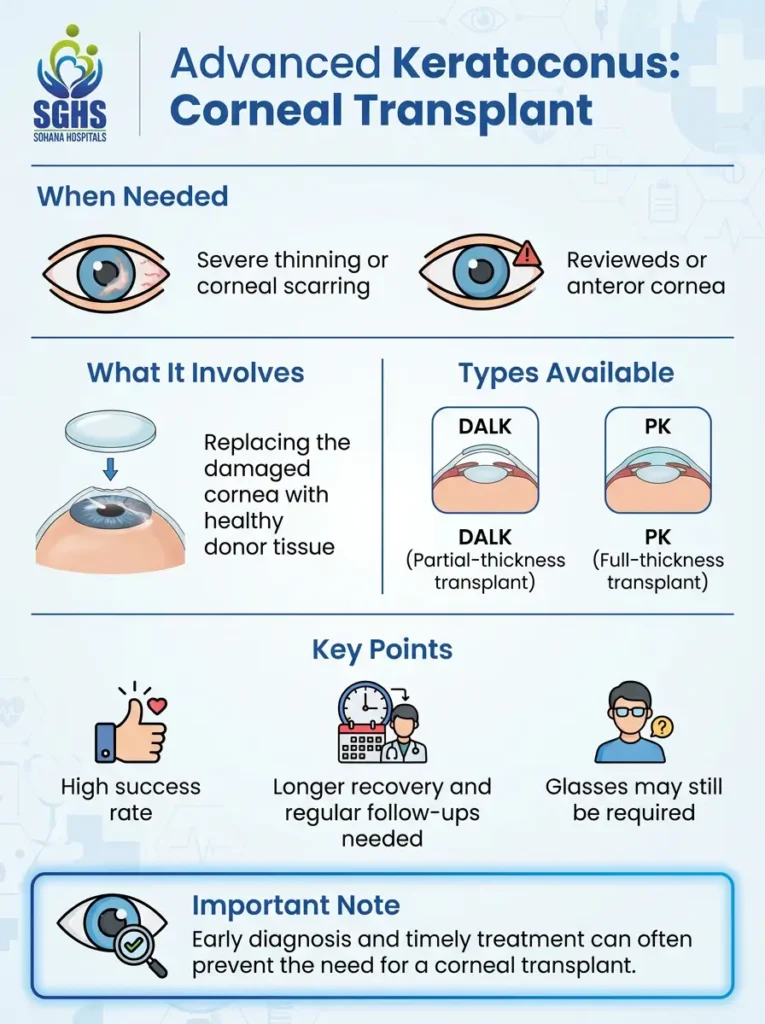
In very advanced cases of keratoconus, where scarring or extreme thinning has occurred, a corneal transplant may be required.
In this procedure, the distorted cornea is replaced with healthy donor tissue to help restore clear vision. It is the last resort and recommended when no other treatment works.
At Sohana Eye Hospital, Mohali, two advanced corneal transplant procedures are available for treating keratoconus – DALK (Deep Anterior Lamellar Keratoplasty) and Full-Thickness Penetrating Keratoplasty (PK).
The corneal transplant surgery comes with a high success rate; however, recovery may be long, multiple follow-up visits to the eye specialist may be needed, and some patients may still need glasses to see clearly.
That is why it is vital to discuss all keratoconus treatment options with your eye surgeon before finalising a particular course of action.
Note: With early diagnosis and timely treatment, most patients never reach the advanced stage where the only option they have is a corneal transplant.
What is the Best Treatment for Keratoconus?
Since keratoconus does not have a cure, the best treatment is early diagnosis, regular monitoring, and timely intervention. Modern eye care makes it possible for most people with keratoconus to lead a normal life with good functional vision.
If you or your child experiences any such eye issues as frequently changing specs prescription, blurry vision, or rising astigmatism, do not delay an eye assessment. It can make a huge difference in the way you see.
Looking for the ‘best cornea specialist near me’? Sohana Eye Hospital, Mohali, is here to meet all your eye care needs. From the basic eye checkups for weak eyesight to the most advanced keratoconus treatments, you get everything in one place.
The earlier the diagnosis – the better the vision you are likely to have with keratoconus.