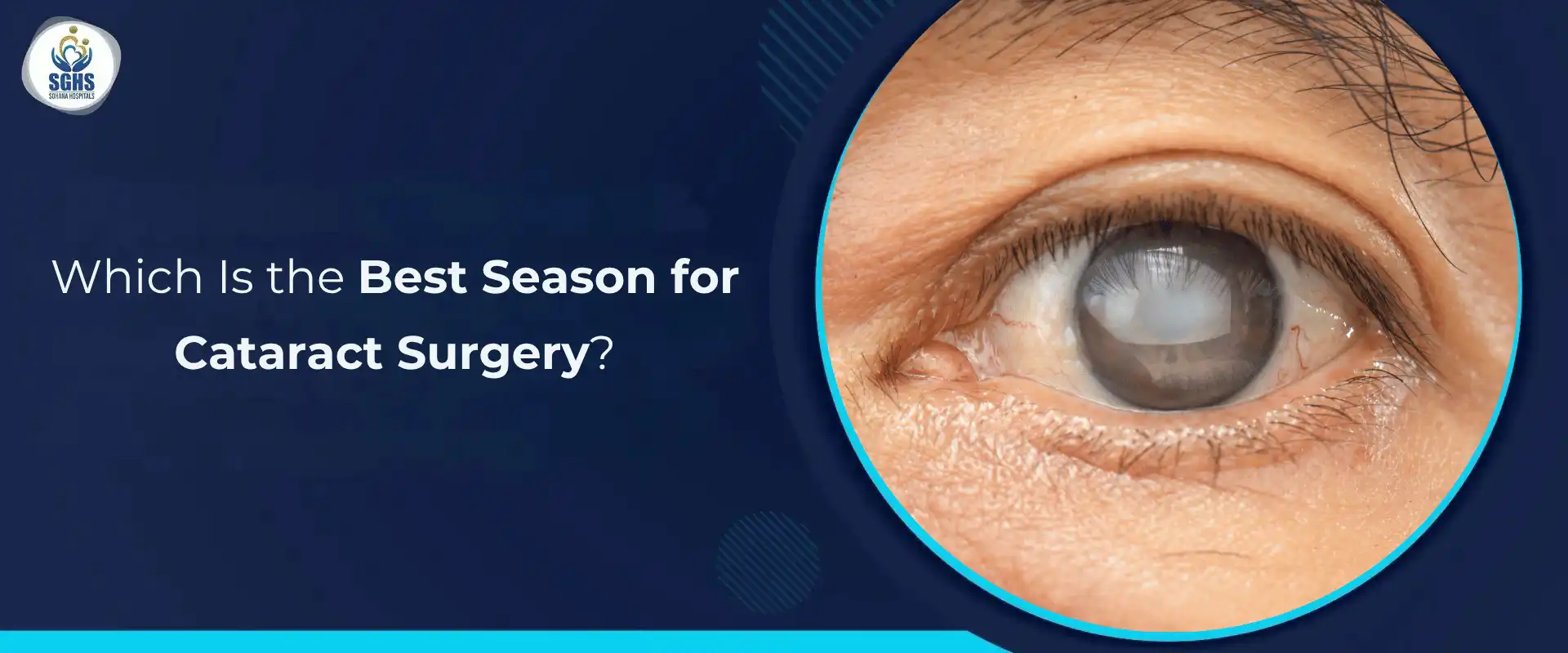
Cloudy vision blurring your world? Cataracts can be frustrating – they affect daily life activities such as reading, driving, and even recognising loved ones’ faces.
Once you decide to seek help and visit an ophthalmologist who advises surgery, another question arises: what’s the “best time” of the year to undergo cataract surgery? It is a valid concern that many patients have.
We’ve heard so many beliefs after all ~ Winter facilitates faster healing, monsoon can make you prone to infections, recovery is long in summer – but how true are these?
The truth is: There is no best time to undergo surgery for cataract removal. Modern technologies and advanced treatment yield the same results all year round!
In this blog, we are going to tell you why season doesn’t matter when it comes to getting cataract surgery and why you shouldn’t always believe hearsay.
Read more on:
ToggleIs There a Medically “Best Season” for Cataract Surgery?
From a strictly clinical standpoint, there is no single “best” season in which you should get cataract surgery.
The procedure is performed in sterile climate-controlled OTs, making the weather outside the operation theatre irrelevant to the surgery’s outcomes.
Modern technologies and surgical procedures are safe, advanced, and ensure consistent visual results across seasons. The best time for cataract surgery is simply determined by your unique visual requirements and your surgeon’s recommendation, and never the time of year.
If your cataracts are significantly impacting your daily life and ability to perform routine tasks, then the right time to undergo surgery is as soon as it can be arranged.
How Do Different Seasons Affect Your Recovery After Cataract Surgery?
While no season affects your cataract surgery’s success directly, your post-op comfort and recovery can still be dependent on the ongoing season. Let’s explore some pros and cons of scheduling your surgery in different Indian seasons.
Cataract Surgery in Summer
Pros:
- Social Obligations: Summer is often a period with fewer social obligations, festivals, and weddings, which can make recovery easier, giving you ample time to rest at home.
- Easy Commute: Before the monsoon hits, summer is usually a good time to commute to and from the hospital for pre-surgery evaluations, surgery day, and post-op follow-ups.
Cons:
- Loo: Loo during the summer can cause unwanted irritation because of dust and allergens in the air (although you can safeguard your eyes by wearing the protective glasses given by your doctor and staying inside for 1-2 weeks after your surgery).
- Discomfort due to Heat: Humidity and heat can sometimes make the recovery period feel uncomfortable. Make sure you stay in cool (air-conditioned) and dry spaces, especially when indoors.
Cataract Surgery in Monsoon
Pros:
- Cool Temperature: The drop in the temperature after the harsh summer weather, resting at home becomes much easier and more comfortable.
- Lesser Glare: Cloudy skies mean less harsh sunlight – this is easier on the eyes and helps accelerate healing.
Cons:
- High Humidity: In earlier times, the humidity during the monsoon season was often associated with an increased infection risk. But this has significantly changed in recent times. Just ensure you stay in dry spaces and avoid any direct contact with rainwater, and you will be free from infections.
- Travel Difficulties: Heavy rains can lead to waterlogging and traffic jams, which tend to make commuting and travel more troublesome.
- Power Cuts: If your area is prone to frequent electricity cuts during monsoon – the lack of air conditioning can be a bit inconvenient.
Cataract Surgery in Winter
Pros:
- Comfortable Weather: The dry and cool weather is great for a quick recovery. You can rest without humidity or heat making you uncomfortable.
- Low Infection Risk: The low humidity levels and dry air decrease the risk of fungal and bacterial infections in comparison with the monsoon season.
- Less Pollution: The air is generally cleaner during the winter season with less dusty winds – this is beneficial for a faster and more comfortable recovery.
Cons:
- Wedding & Festival Season: This time of the year is filled with festivals like Diwali, Christmas, and weddings. These might get in the way of ample rest after cataract surgery.
- High Demand: Because people consider winter to be a good time for cataract surgery, most top hospitals and surgeons are booked in advance. You may need to book your surgery months before you plan to get it, or struggle with finding appointments.
*Note: The above-listed pros and cons are general in nature. Your recovery depends largely on your unique body and healing capabilities. Rest assured, the modern technologies available at Sohana Hospital ensure you get your vision back in just a few days with minimal to no post-op complications.
Sohana Hospital offers a wide range of cataract surgery options:
- 4D Phaco Cataract Surgery
- Robotic+AI cataract Surgery (FLACS)
- Micro-Incision Cataract Surgery (MICS)
Consult our expert cataract doctors today to know which surgery fits your unique needs the best. Sohana Hospital has stood as a trusted centre for cataract removal surgery since 1995. With over 30+ years of patients’ trust, expert surgeons, advanced diagnostics, and cutting-edge treatment facilities, the institution offers world-class eye care at the most affordable prices.