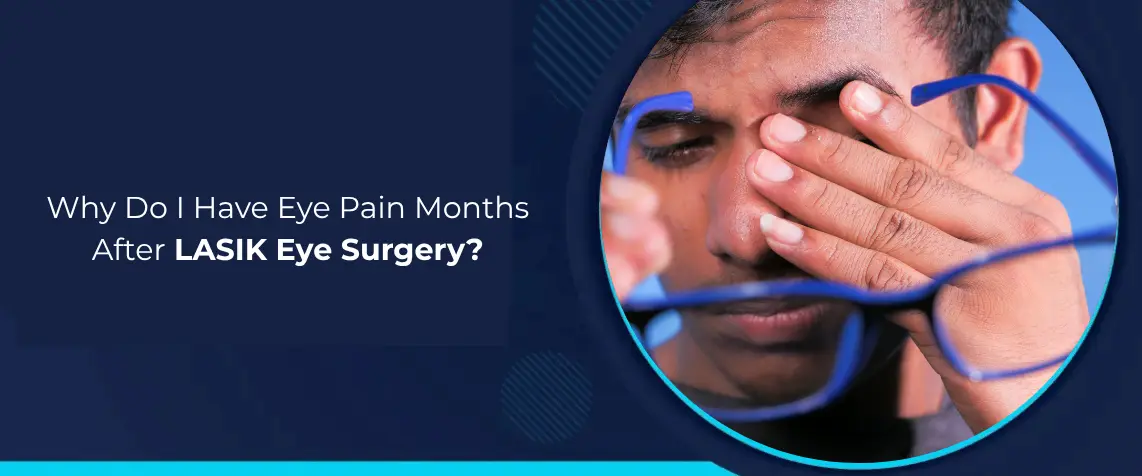
If you’re 6 months post-LASIK eye surgery and still experiencing eye pain, it may not be normal. By this time, most lingering symptoms of dryness, light sensitivity, and pain, etc., tend to subside.
However, if you continue to frequently complain of eye pain after half a year, it may be time for an assessment by your healthcare provider.
Read more on:
ToggleWhy Some People Feel Pain Even Months After LASIK Surgery
Here are some common reasons for pain 6 months after LASIK:
Chronic Dry Eyes
If you had dry eyes before surgery or if the surgery transformed your previously borderline dryness into dry eye syndrome, you may feel a persistent gritty sensation and irritation in your eyes. This grittiness can cause discomfort and pain.
Recurrent Corneal Erosion
This happens when the epithelium (the outermost layer of the cornea) does not fully heal or attach to the basement membrane (underlying tissue). This is a rare complication of LASIK/laser eye surgery, but it can cause sharp pain, soreness, redness, and tearing, etc.
Nerve-Related Pain
Any underlying nerve-related issues can also cause pain, heaviness, soreness, or burning, etc.
Late Infection or Inflammation
This can happen even months after an abrasion, surgery, or injury. You may contract an eye infection that typically presents with pain, light sensitivity, redness, etc.
Other Issues
Other complications such as continued light sensitivity, flap-related issues, etc., can hamper proper healing and continue to cause pain even months after LASIK.
To determine the exact cause of your pain, a consultation with an experienced ophthalmologist or LASIK surgeon may be the best course of action. After a thorough review of your medical history, current condition, and post-LASIK healing, they can prescribe the most suitable pain relief treatment.
Does Eye Pain After LASIK Settle on Its Own?
Typically, dull eye pain may linger for 2-3 months after LASIK surgery. However, the recovery timeline may differ for everyone. This may be due to post-op dryness or light sensitivity. However, if pain lasts longer and if it feels too sharp, it might point to a complication-related issue.
Based on the cause of your pain, you may be prescribed:
- Oral medication
- Nerve medication
- Eye surface protection lenses (scleral lenses or bandages, etc.)
- Lubricant eye drops
- Anti-inflammatory eye drops
*Treatment depends on the specific underlying cause and may differ from person to person.
| IMPORTANT TO NOTE: Sharp pain or debilitating discomfort 6 months after LASIK surgery is not common among LASIK patients. However, complications can occur. If you notice any of the mentioned symptoms, a trusted eye doctor may help you. |
When to See A Doctor Immediately?
Here’s a concise look at when to see your doctor immediately, when to seek care soon, and when to mention your symptoms at the next scheduled follow-up visit:
| SYMPTOMS | LIKELY CAUSE | WHAT TO DO |
| Eye pain after an injury or blow to the eye | Flap disruption or injury due to physical trauma | Seek immediate care |
| Light sensitivity, falling vision, redness, discharge & pain | Inflammation or infection | Seek immediate care |
| Burning sensation & soreness (physical appearance of the eye is normal) | Potentially nerve-related pain | Consult a dry eye or cornea specialist soon |
| Sharp pain when you wake up (feeling like your eyes are scratched) | Possible corneal erosion | Consult your LASIK surgeon soon |
| Mild grittiness & dull pain (typically settles after eye drop use) | Dry Eye | Mention to your doctor at the next follow-up visit |
Eye pain 6 months after LASIK surgery is not common for most individuals. However, it can happen. If and when that does happen, it is advisable to get the corneal surface, flap, nerves, and glands checked early for timely cause identification and pain-relief treatment.
If the symptoms hamper your everyday functioning and have started significantly impacting your routine, a consultation with an eye specialist may prove fruitful. A comprehensive assessment may help provide the most suitable pain-management strategies and treatment.