🗓️ [Last Updated On: Sep 14, 2026]
LASIK, also known as Laser in Situ Keratomileusis, is a well-known surgical procedure that corrects common eyesight problems like myopia (nearsightedness), farsightedness (hyperopia/hypermetropia), and astigmatism (cylindrical power).
| REFRACTIVE ERROR | COMMON NAME | HOW IT AFFECTS YOUR VISION |
| Myopia | Nearsightedness | Near vision is clear; far-away objects are blurry |
| Hyperopia | Farsightedness | Distant vision is clear; close-up objects appear blurry or unclear |
| Astigmatism | Uneven cornea (cylindrical power) | Distorted or blurry vision at all distances because of uneven surface of the cornea |
This advanced technique uses laser energy to reshape an irregularly shaped cornea, thereby correcting vision. The cornea is the eye’s clear, outermost layer that allows light to enter the eye and focus on the retina. An irregularly shaped cornea (too long or too flat) does not let light focus directly on the retina, resulting in unclear vision. LASIK corrects this by reshaping the curvature of the cornea, allowing light to pass through and focus on the retina properly.
The surgery is a daycare procedure, meaning you can go back home the same day. It has become increasingly popular among specs-wearers for its quick recovery time, minimal discomfort, enhanced visual outcomes, and the ease of life it brings in the long-term.
| 💡 DID YOU KNOW? The concept of LASIK was first brought to light by Jose I. Barraquer Moner in 1948. |
Fill details below to get actual cost of LASIK
Want to Know the INs & OUTs of LASIK Surgery? Watch this video 👇
When is LASIK Surgery Performed?
LASIK is a commonly recommended procedure for people who are struggling with refractive errors and want permanent freedom from glasses or contact lenses.
- Myopia or nearsightedness: This condition develops when the eyeball becomes too long. This causes light to focus in front of the retina, instead of directly on it, leading to distant objects appearing unclear.
- Hyperopia or farsightedness: This condition occurs when the eyeball is too flat. Light entering the eye focuses behind the retina, instead of directly on it, causing blurry near vision.
- Astigmatism: This is caused by the irregular curvature of either the cornea or the lens, leading to distorted (blurry) vision at all distances.
Most of our patients come to us when they find their eyesight problems interfering with daily life activities such as driving, reading, or partaking in sports. While spectacles and contact lenses act as temporary aids in facilitating clear vision, many individuals want a more permanent solution.
Who is a Good Candidate for LASIK Eye Surgery?
If you’re wondering whether you meet the conditions to undergo LASIK and get rid of specs, here’s a list of the criteria:
- Must be aged 18 or above: There is a minimum age requirement for LASIK surgery. The reason that no doctor will agree to operate on a patient younger than 18 years old is that their eyes are still changing until the age of 18. Refractive errors can continue to progress in adolescence and generally tend to stabilise around the age of 18.
- Adequate corneal thickness: LASIK eye surgery involves making an incision and creating a flap on your cornea. For this, your cornea needs to be thick enough. This is because leaving too little tissue behind can weaken your eye’s structural integrity. In case your corneal thickness is not sufficient, there are other vision correction options besides LASIK.
- Stable specs number for 1 year: For lasting visual stability, your eye power must be stable for at least 1 year prior to LASIK eye surgery. This is because if your refractive error is continuously progressing and you undergo LASIK, you still run the risk of the error progressing even after the surgery, nullifying the surgery’s effects.
- No other eye conditions: Other underlying eye conditions, such as keratoconus, cataract, glaucoma, etc., can impact the effectiveness of the surgery, hamper the healing process, and even lead to visual impairment (in severe cases).
- Good overall health: Good physical health is also a parameter when assessing your eligibility for the procedure. If you have any underlying health conditions like hypertension (high BP), diabetes, or heart disease, they must be well managed and under control. Even then, you need a complete physical evaluation to qualify for specs removal surgery.
- Not pregnant or lactating: Pregnancy and nursing can cause temporary vision changes. This can lead to inaccurate assessments and unreliable visual results. This gives the pregnancy-induced vision or refractive changes ample time to subside, giving your surgeon a true picture of your vision condition.
| *Note: Besides the above-mentioned conditions, there are multiple eye tests that are conducted to determine your eligibility for LASIK. These tests check the corneal, retinal, and tear film health, among others. |
Screening Tests Before LASIK Surgery
You will need to undergo a complete eye evaluation (pre-LASIK screening tests) before your specs removal surgery. Here are all the tests that the screening includes:
| TEST NAME | MEASURES | WHY IT’S IMPORTANT |
| REFRACTION | Specs number/eye power | To check the current & accurate eye power |
| EYE PRESSURE TEST | Intraocular pressure (IOP) | Increased IOP can be a sign of glaucoma, which needs management |
| CORNEAL TOPOGRAPHY | Shape & surface of the cornea | To identify aberrations & irregularities that can affect laser planning or rule out LASIK completely |
| TEAR FILM ANALYSIS | Quantity & quality of tear production | To identify dry eye syndrome, as flap-based LASIK can worsen dryness |
| SLIT LAMP EXAMINATION | The anterior portion & structures of the eye | To ensure that the front portion of the eye is structurally strong; To identify eye problems such as corneal scars, etc. |
| PACHYMETRY | Thickness of the cornea at multiple points | To ensure there is enough corneal tissue to be operated on safely (thin corneas need a different approach than flap-based LASIK) |
| RETINAL EXAMINATION | Central & peripheral retinal health | High myopia patients have a higher risk of retinal issues; this test checks the overall health of the retina |
Types of LASIK/Laser Eye Surgery
There are many different types of LASIK surgery. Some of the most common types include:
- Conventional LASIK: Conventional or traditional LASIK surgery refers to the oldest form of vision correction. Invented in the 1900s, it served as a worthy specs removal option for refractive errors like myopia, hyperopia, and astigmatism. It involves the creation of a flap, through a mechanical blade or microkeratome, to reshape the cornea.
- Femto LASIK: Femto LASIK or bladeless LASIK, is an advanced version of standard LASIK. This procedure does not involve the use of a blade. It simply creates a corneal flap by using a femtosecond laser and reshapes the cornea via an excimer laser.
- PRK or Photorefractive Keratectomy: This is a no-flap vision correction surgery. It dissolves the topmost layer of the cornea (referred to as the epithelium) and then reshapes the cornea. Recovery time is slightly longer after this procedure, but it is ideal for people with thin corneas or those who aspire to qualify for a government job.
- Topography-guided LASIK: This type of surgery involves scanning the eye for an accurate assessment of the exact elevation points that require correction via laser. This is ideal for patients with myopia, hyperopia, and astigmatism.
- Wavefront-guided LASIK: This is the latest technology in specs removal. It involves mapping the eye, creating a virtual model, simulating possible laser patterns, and then implementing the ideal pattern for the best visual results. It corrects complex refractive errors as well as irregularities on (and even beyond) the corneal surface.
- Flapless laser specs removal: A minimally invasive alternative to LASIK, this surgery does not involve a corneal flap. Instead, a tiny incision and a lenticule (a lens-shaped disc in the cornea) are created. The lenticule is removed through the incision, and the cornea is reshaped, giving sharp, specs-free vision.
| 💭 Studies state the average patient satisfaction rate after myopic LASIK is 95.3% (research result: 1811 out of 1901 patients), and after hyperopic LASIK is 96.3% (research result: 286 out of 297 subjects). [via NIH] 👉 Globally, an average of 95.4% of patients who underwent LASIK were satisfied with the results of surgery. |
LASIK Eye Surgery Procedure
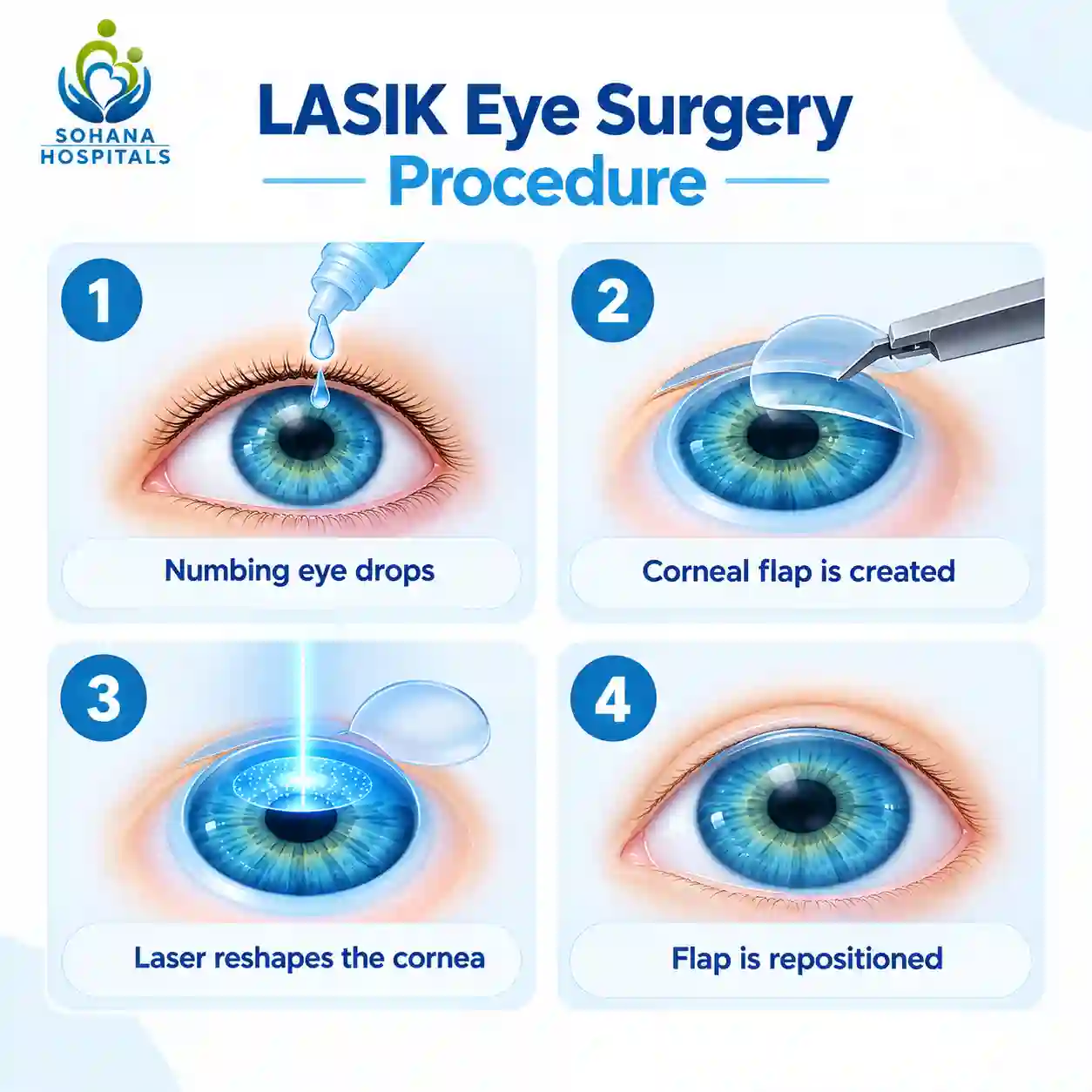
Here’s a concise look at the LASIK surgery procedure:
- 1st Step: Numbing eye drops are administered topically before the surgery begins to ensure a painless, comfortable experience.
- 2nd Step: Then, a corneal flap is created through either a microkeratome (mechanical blade) or a femtosecond laser. The flap is flipped onto its side, exposing the underlying corneal tissue.
- 3rd Step: Next, a laser is applied to the underlying tissue for corneal reshaping.
- 4th Step: Finally, the flap is positioned back in its original place, and it heals in a few days.
Learn more about: Step-By-Step Guide to LASIK Surgery Procedure
Meet Our Expert LASIK Surgeons
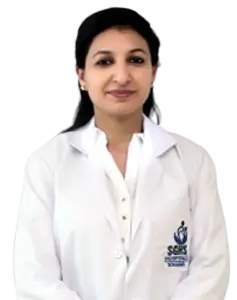
Dr. Amanpreet Kaur
Dr. Amanpreet Kaur is a gold medal holder in ophthalmology and has over 20 years of experience in eyecare. Adorned with the 2025 edition of the Iron Lady Award for her immense contribution to the eyecare field, she is a member of several prestigious national and international ophthalmological societies. Dr. Amanpreet Kaur is widely known for her proficiency in all advanced specs removal surgeries. Patients remember her for a patient-centric approach with a special emphasis on addressing all their queries and doubts. Her enormous experience and commitment make her one of India’s best SMILE Pro surgeons.
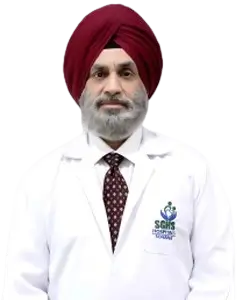
Dr. Gurmeet Singh Mangat
Dr. Gurmeet Singh Mangat is an acclaimed name in the eyecare domain. With nearly 3 decades of experience treating patients and restoring clear vision, he holds a LASIK fellowship from the USA. He has performed a key role in shaping the eyecare landscape within the country and beyond. During his vast career, he has conducted thousands of SMILE Pro surgeries with utmost precision and care. No doubt then that he features among the best SMILE Pro surgeons in Mohali.
LASIK Surgery Recovery
Most LASIK surgeries offer a quick visual recovery within 24-48 hours. Most patients experience corneal healing and visual stability in 1-3 weeks. You may stop noticing most post-op symptoms (dry eyes, halos, glare) in a few weeks; however, your vision will continue to get better for about 3-6 months post-op.
Here are some precautionary tips you must adhere to in the days following your LASIK specs removal surgery:
- Follow your prescribed eye drop routine: After your surgery, your surgeon will prescribe some antibiotic, steroid, and lubricating eye drops for a comfortable healing period.
- Do not rub or touch your eyes: You will need to refrain from rubbing or even touching your eyes for a few days after the surgery. The corneal flap needs to heal without any disruption.
- Wear protective eyewear outdoors: To protect your eyes from dust, direct sunlight, pollutants, and allergens, it is crucial to wear protective eyewear every time you step outdoors.
- Rest your eyes whenever possible: You will be advised to take naps and rest (close) your eyes as much as possible so they can heal properly.
- Do not use makeup or skincare products close to your eyes: All makeup & skincare products are to be strictly avoided for the first 2 weeks post-surgery.
- Avoid contact sports: Contact sports and aggressive physical contact may disrupt the corneal flap’s healing process. It’s important to be mindful of this and refrain from such activities till your eyes have healed completely.
- Schedule regular follow-up appointments: Follow-up appointments are essential to monitor your visual recovery and keep track of your eye health.
*Note: It is important to note that recovery after LASIK may not be the same for everyone. Every individual is different and may experience different recovery timelines based on their body’s healing abilities & type of surgery.
Learn more about: LASIK Surgery Recovery Tips
LASIK Eye Surgery Cost in India
LASIK surgery costs in India depend on a number of factors. Some aspects that may influence the cost of specs removal treatment include:
- Credibility of the hospital
- Experience & expertise of the LASIK surgeon
- Type of LASIK surgery
- Degree of vision correction required
*Note: Costs may also depend on seasonal & exclusive discounts.
Fill details below to get actual cost of LASIK
Your message has been sent
LASIK Eye Surgery Benefits
Major benefits after LASIK surgery include:
- Clear vision without specs: LASIK can help you achieve standard 6/6 vision (some people even achieve 6/5 or 6/4 vision – better than the standard/normal vision) without spectacles or contact lenses.
- No more glare, halos, or streaks around lights: Some advanced LASIK surgeries like Wavelight Plus InnovEyes and Contoura Vision don’t just correct your refractive errors but also corneal and optical irregularities (higher-order aberrations). This results in sharp visual clarity without any glare, halos, or starbursts.
- Eligible to apply for competitive exams without worries: If you’re a government job aspirant, LASIK or PRK (government-accepted vision correction procedures) surgery can help you achieve your dreams.
- Long-lasting stable vision: With advanced LASIK procedures, you get long-lasting visual clarity and stability. This means no more dependency on spectacles for clear vision.
- Better overall quality of life: And last but not least, no more reaching for specs every morning, no more foggy glasses, no more broken frames – no more specs struggles!
LASIK surgery offers a wide range of benefits and enhanced visual comfort to lakhs of patients who choose to remove their specs permanently. If you wish to get rid of glasses, visit Sohana Hospital – North India’s largest specs removal centre.
The institution boasts a Complete Refractive Suite – meaning you get all advanced US-FDA approved specs removal technologies under one roof! Diagnostic tests are performed under the expert care of the expert eye specialists, ensuring you are advised only the most suitable surgery for your unique visual requirements.
So why wait? Get clear vision with LASIK today!
Frequently Asked Questions
1. Is LASIK surgery painful?
No, LASIK specs removal surgery is not painful. Topical numbing eye drops are administered before the surgery, so you will not feel any pain or discomfort during the procedure.
2. Is LASIK surgery safe?
Yes, LASIK eye surgery is a safe and effective specs removal procedure for eligible candidates. Since its inception, the surgery has successfully given the gift of clear vision without specs to millions of happy patients. To determine the safety and effectiveness of LASIK for your unique eyes, you must consult a trusted LASIK surgeon who can assess your overall eye health & recommend the best possible treatment for you.
3. Is LASIK permanent?
The results of modern and advanced LASIK procedures offer long-lasting visual clarity and stability. Most patients experience long-term freedom from specs.
4. Who can get LASIK surgery?
Anyone above the age of 18, with adequate corneal thickness, a stable specs power, no other serious eye conditions, and good overall eye & physical health can undergo LASIK eye surgery.
5. Can I get LASIK eye surgery in both eyes?
If you have a refractive error in both eyes, then yes, you can definitely undergo vision correction in both eyes. The surgery for both eyes can be done in a single day.
6. How much does LASIK cost?
The cost of LASIK in India depends on multiple factors, including the expertise of the surgeon, the reputation and credibility of the hospital, the type of surgery performed, and the degree of refractive errors, among others.
7. How soon can I drive after LASIK surgery?
Most of our LASIK patients recover fairly quickly, resuming everyday tasks like driving, reading, and going to work, etc., in 2-3 days post-surgery. How soon you can get back to driving depends on your recovery. You can get back to routine activities as soon as your doctor gives you clearance.
8. How long does LASIK last?
LASIK surgery generally takes 10-15 minutes. However, the exact time depends on the technology and type of specs removal surgery. Most vision correction treatments take approximately 30 minutes to give you clear, specs-free vision.
9. Will I need to stay in the hospital after LASIK surgery?
No, you can go home the same day as your LASIK surgery, following a short period of observation.
10. How soon can I expect clear vision after LASIK surgery?
You can expect clear vision almost immediately after you undergo LASIK surgery. Follow all necessary precautions after the surgery for a quick recovery. Your vision will stabilise over a few days post-op.