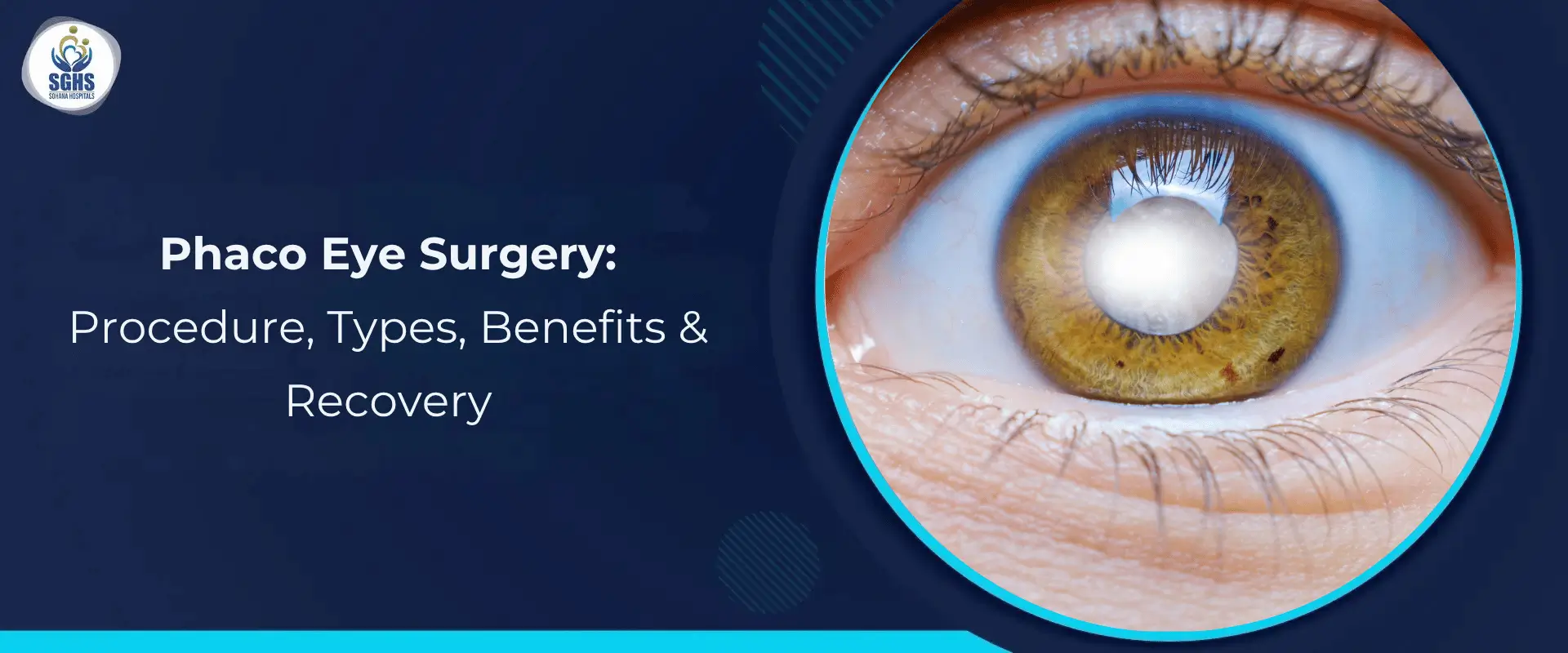
Phacoemulsification or phaco surgery is a widely used treatment for cataracts. This minimally invasive technology employs ultrasound energy in order to break down and remove the cloudy natural eye lens through a tiny incision.
The surgery, followed by IOL (intraocular lens) placement, restores crystal clear vision with minimal downtime. As compared with conventional methods, phacoemulsification stands as a more precise cataract removal treatment, offering faster recovery and enhanced visual outcomes.
In this blog, we are going to discuss what the surgery entails, the benefits it offers, and the approximate recovery timeline, so you can make an informed decision.
Read more on:
TogglePhaco Surgery for Cataract: Overview
Phacoemulsification cataract surgery is a cutting-edge treatment for effective cataract removal.
👉 Cataracts are clouded and hard areas in the natural lens of the eye that can cause vision impairment.
The procedure involves the use of ultrasound energy to break down the cloudy lens into fragments. The fragments are then extracted through a tiny incision. Finally, an IOL is implanted to facilitate clear vision.
Phaco surgery is an effective procedure for treating cataracts and has gained popularity in recent times owing to its precision, safety, and quick recovery time. It involves a small incision, which reduces the risk of post-op complications and enhances healing.
Phaco Surgery Eligibility
Phacoemulsification cataract surgery is ideal for most people diagnosed with cataracts. Overall eligibility depends on:
- The severity of cataracts
- Strong corneal integrity
- No other eye conditions (like glaucoma or retinal diseases)
- Good overall health (diabetes & hypertension under control)
Phaco Surgery Procedure
Step 1
The first step involves administering eye drops to dilate the pupil. This is followed by numbing eye drops so the patient does not feel any pain or discomfort during the surgery.
Step 2
Then, a small incision (2-3 mm) is made on the cornea. Additionally, a small circular opening is created in the natural lens of the eye so the cataract can be accessed.
Step 3
Next, ultrasound energy is applied to the cataract-affected area in the lens to break it down into small fragments. These fragments are then extracted through the small incision.
*Note: The incision is self-sealing (heals in a few days) and does not require sutures.
Types of Phacoemulsification
There are multiple types of phacoemulsification surgeries available at Sohana Hospital. These include:
Benefits of Phaco Eye Surgery
Benefits of phacoemulsification cataract surgery include:
- Minimally invasive
- Fast recovery
- Restored vision quality
- No post-op complication risk
- No stitches, no pain
Phaco Eye Surgery Post-Op Precautions for Fast Recovery
- Follow the prescribed eye drops routine
- Do not rub or put pressure on the operated eye
- Do not indulge in heavy lifting for a few weeks
- Must wear protective eyewear outdoors
- Rest your eyes when possible
- Schedule regular follow-up appointments
Sohana Hospital has a team of expert cataract specialists who are skilled in handling even the most complicated cases of cataract. Advanced diagnostics, modern surgical equipment, strict hygiene & safety regulations ensure you get the best cataract treatment.
If you or a loved one has been dealing with cataracts and is looking to restore clear vision, visit Sohana Hospital, Mohali, today!
Frequently Asked Questions:
1. What is the difference between phaco and MICS surgery?
MICS is an advanced version of phacoemulsification cataract surgery. MICS typically involves a smaller incision and facilitates a quicker recovery and return to normal life.
2. Is phaco surgery painful?
No, hacoemulsification cataract surgery is not painful. Since topical anaesthesia drops are administered before the surgery begins, patients do not feel any pain or discomfort during the cataract removal procedure.
3. Who can get phaco surgery?
Most patients who have been diagnosed with cataract can undergo phacoemulsification cataract surgery. However, there is a set of conditions you must meet in order to completely qualify as a good candidate for phacoemulsification.
4. Can I get phaco eye surgery in both eyes?
If you have been diagnosed with cataract in both your eyes, then yes, you definitely can undergo phacoemulsification surgery for both eyes. However, it is important to note that doctors typically operate only one eye at a time. Meaning your second cataract surgery will only be scheduled after one eye has completely recovered.
5. How soon can I drive after phaco surgery?
Most patients recover quickly after undergoing phacoemulsification cataract surgery at Sohana Hospital. Many of our patients have reported that they started driving again just 4-5 days after their surgery.
6. How long does phaco surgery take?
Phacoemulsification surgery typically takes around 15-30 minutes. You will only need to take out a few hours (including the pre and post-operative monitoring) from your day to visit the hospital and undergo the surgery.
7. Will I need to stay in the hospital after phaco surgery?
No, you do not need to be admitted to the hospital when you undergo cataract surgery. After your surgery is completed, you will be asked to stay in the observation area for approximately 1 hour, so your surgeon can monitor your condition. Following this, you can go home the very same day!
8. How soon can I expect clear vision after phaco surgery?
You can expect enhanced visual clarity a few hours after the surgery. Your vision will continue to get better and stabilise over the course of a few days after the surgery.
9. What do I need to avoid after phaco surgery?
You need to follow some simple precautions after your phaco cataract surgery. These include following your eye drop routine, avoiding strenuous activity, not rubbing your eyes, wearing protective eyewear, and giving ample rest to your eyes.
10. How long is phaco surgery recovery time?
You can expect complete recovery in 1-3 weeks after you undergo phacoemulsification surgery. However, it is important to remember that the more advanced your surgery, the faster your healing. AI+Robotic/FLACS and 4D phaco, both of which are available at Sohana Hospital, offer a faster recovery than conventional phacoemulsification surgery.
11. Can phaco surgery treat other vision problems, too?
If you have presbyopia and need reading glasses for close-up tasks, choosing an IOL that facilitates clear near vision can eliminate the need for glasses after your phaco surgery. There are many options when it comes to IOLs. Some only provide clear distance vision, some provide clear distance and intermediate vision, while others provide clear vision at multiple distances (near, intermediate, distance).
12. Are there any side effects of phacoemulsification surgery?
Phacoemulsification surgery is a safe procedure and comes with no or minimal side effects. Some common issues immediately after surgery can include slightly blurred vision or light sensitivity. These symptoms resolve on their own, with the use of prescribed eye drops for a few days following your surgery. You will experience complete
visual clarity once your cornea has fully healed.