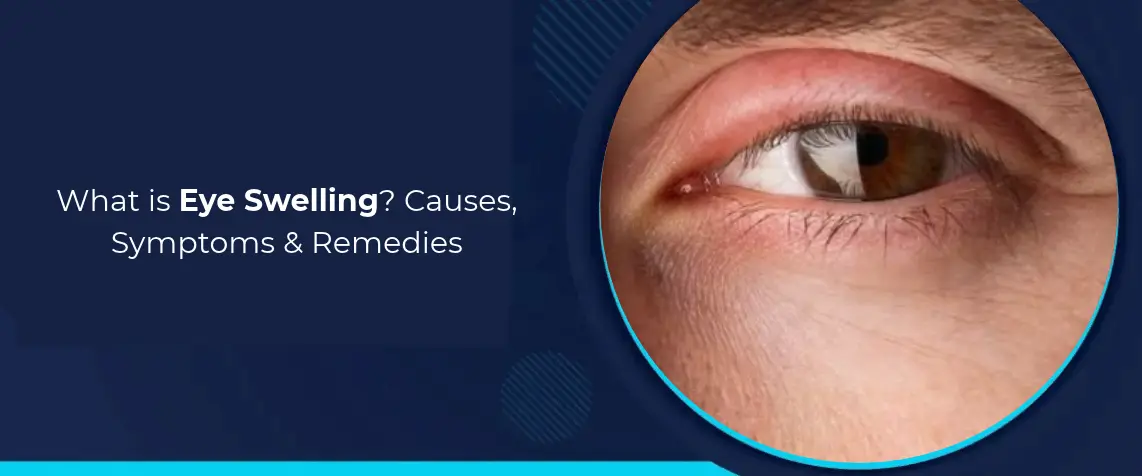
Eye swelling is not an uncommon occurrence. It can affect people of all ages for varying reasons. You may wake up one day with a swollen eyelid and wonder, “Why is my eyelid swollen?”.
Eye swelling is, more often than not, temporary, caused by bug bites or slight allergic reactions. But it could also be the result of an injury, infection, or an underlying medical concern.
It is important to understand different eye swelling causes and symptoms, so you can promptly identify when you need to seek professional medical care. In this blog, we will discuss eye swelling, its causes, signs, home remedies, etc.
Read more on:
ToggleAn Overview: What is Eye Swelling?
Eye swelling is puffiness around the eyelids (also referred to as periorbital oedema in certain cases of swelling due to fluid build-up). It can happen in cases of excess fluid, trauma, or inflammation. Both the upper and lower lids can be affected by eye swelling as a result of infections, allergies, general irritation, or other health conditions.
In many cases, swelling around the eyes is temporary and generally subsides with ample hydration, rest, or simple home remedies. However, if you notice persistent or painful swelling – you must seek medical care from an eye specialist.
What Are Some Common Eye Swelling Causes?
There are multiple reasons for swollen eyes. Here are some common causes:
Allergies
Allergies are one of the most common reasons for eye swelling, often affecting both eyes together. Exposure to excess dust, pet dander, pollen, mould, dust mites, etc., can cause itchy, irritated, and puffy eyes. Allergies can also release histamines, which may lead to fluid build-up and consequently swollen eyelids.
Infections
Eye infections are another reason for upper eyelid swelling. These include conjunctivitis (pink eye), cellulitis, styes, or blepharitis. Infections tend to cause discharge, pain, redness, and substantial swelling around the eyes. With timely and appropriate treatment, the eye swelling usually goes down.
Injury or Physical Trauma
Swelling can also be a result of a physical injury or trauma caused to the eye. Examples include scratches, accidental bumps, or a foreign object getting inside the eye. An eye injury can lead to inflammation in the eye. Medical care right after an eye injury ensures your eyes are safe from internal damage.
Fluid Retention
Another common cause is fluid or water retention. An improper sleep schedule, extreme salt intake, and hormonal changes can all lead to puffiness. This type of lower eyelid swelling is generally short-lived and tends to get better with lifestyle adjustments.
Symptoms of Eye Swelling
It is crucial to identify all possible symptoms of swelling below the eyes, as they may help recognise underlying health issues that may need urgent medical attention.
- Visibly enlarged or puffy eyelids
- Feeling of heaviness
- Difficulty in opening the eyelid
- Mild redness around the eyes
- Pain while moving the eye
- Itching
- Tenderness
- Warmth around the eyes
- Discharge
- Blurred vision
| *Note: Not all of the above-mentioned symptoms may occur at the same time. You may experience only one, some, or all symptoms depending on the cause of your eye swelling. |
Home Remedies for Eye Swelling
In case of mild eye swelling that is not accompanied by any pain or blurry vision, you can try these remedies at home, as they may help relieve the swelling:
- Sleep with your head in an elevated position to avoid fluid retention.
- Try applying a clean, cold compress to the affected area around your eyes. This will help calm down the puffiness.
- Avoid rubbing your eyes, as it can heighten irritation.
- You may use over-the-counter antihistamines only if you know the swelling is caused by allergies.
- Try to limit your daily salt intake.
| IMPORTANT: These home remedies should not be used as a substitute for actual medical assessment and advice. If the swelling is accompanied by pain, blurry vision, or persistent irritation, a consultation with an eye doctor can help you get appropriate and timely treatment. |
When to See an Eye Doctor?
Mild swelling or puffiness may improve with rest and some simple DIY remedies. But it is important to see an eye doctor or specialist in case:
- The swelling is severe or persistent
- Eye swelling is accompanied by discharge, pain, or fever
- Swelling is accompanied by blurry vision
- Swelling is caused after an eye injury
Your doctor will advise the right course of treatment based on the cause of your eye swelling. Based on what has caused the swelling, you may be prescribed lubricating, antihistamine, or antiviral/antibacterial eye drops or ointments. Alternatively, in rare cases, if your condition requires surgical intervention, the doctor may advise the same.
Timely diagnosis and treatment can help relieve the symptoms of swelling and counter any underlying health conditions as well.
Sohana Hospital is an eye hospital in Mohali, specialising in various types of complex eye conditions. Advanced diagnostic tools, modern treatment facilities, and expert eye specialists – all aim at making quality eye care accessible to all.