Eye flu is a common eye problem that many people face during the rainy season. Also known as conjunctivitis, it presents with symptoms like itching, redness, and watery discharge from the eyes, causing considerable discomfort and interfering with routine life.
The good news is that most cases can often be treated effectively. Let us see what eye flu is, its symptoms, causes, home remedies, other treatment options, and prevention.
What is Eye Flu?
Also known as conjunctivitis, eye flu is an eye condition in which the conjunctiva (the clear, moist, delicate membrane that covers the white part of the eye and the inside surface of the eyelids) gets inflamed.
The conjunctiva helps shield and lubricate the surface of the eye. Its inflammation results in symptoms like itching, redness, watering, and a feeling of having something in the eye.
Eye flu is often a non-serious condition and improves on its own in 1-2 weeks. Only in some cases is medical intervention required.
What are the Symptoms of Eye Flu?
Here are the common symptoms of eye flu:
| Symptom | Explanation |
| Redness | The white part of the eye may turn red or pinkish |
| Itching | A common symptom, especially in allergic conjunctivitis. You may feel like rubbing your eyes |
| Burning | A sensation of irritation or burning in the eyes |
| Watery discharge | Eyes may become excessively watery, particularly in allergic and viral conjunctivitis |
| Grittiness | You may feel as if some sand particle is stuck in the eyes |
| Swelling | There may be swelling in the eyelids |
| Photophobia | You may experience increased light sensitivity |
| Crusting | You may wake up with crusting on the eyelashes or around the eyelids because of discharge from the eyes |
Depending on the cause, symptoms may vary from person to person and range from mild to severe.
Here are the symptoms that occur when eye flu becomes severe:
| Symptom | Explanation |
| Severe redness | Eyes may appear bloodshot, indicating a serious infection |
| Pain | You may experience discomfort & pain in the eyes, making it difficult to perform daily activities |
| Thick discharge | A thick yellowish or greenish discharge that may make eyelids stick together (often occurs when eye flu is caused by bacteria) |
| Changes in vision | Blurred vision that doesn’t clear with blinking or gentle cleaning of the discharge |
| Swelling in Lymph Nodes | Specific types of viral conjunctivitis may cause lymph nodes around the neck or ears to swell |
| Worsening symptoms | Symptoms show no improvement or actually worsen even when treatment is going on |
| Cornea getting affected | Sometimes, the cornea (clear outermost layer of the eye) also gets infected, resulting in other, serious complications |
If symptoms do not subside or become severe, you must consult an eye doctor. It is essential for effective management of the condition and to avoid complications.
What are the Causes of Eye Flu?
Eye flu has diverse causes ranging from environmental irritants to microbial infections. Let’s have a look:
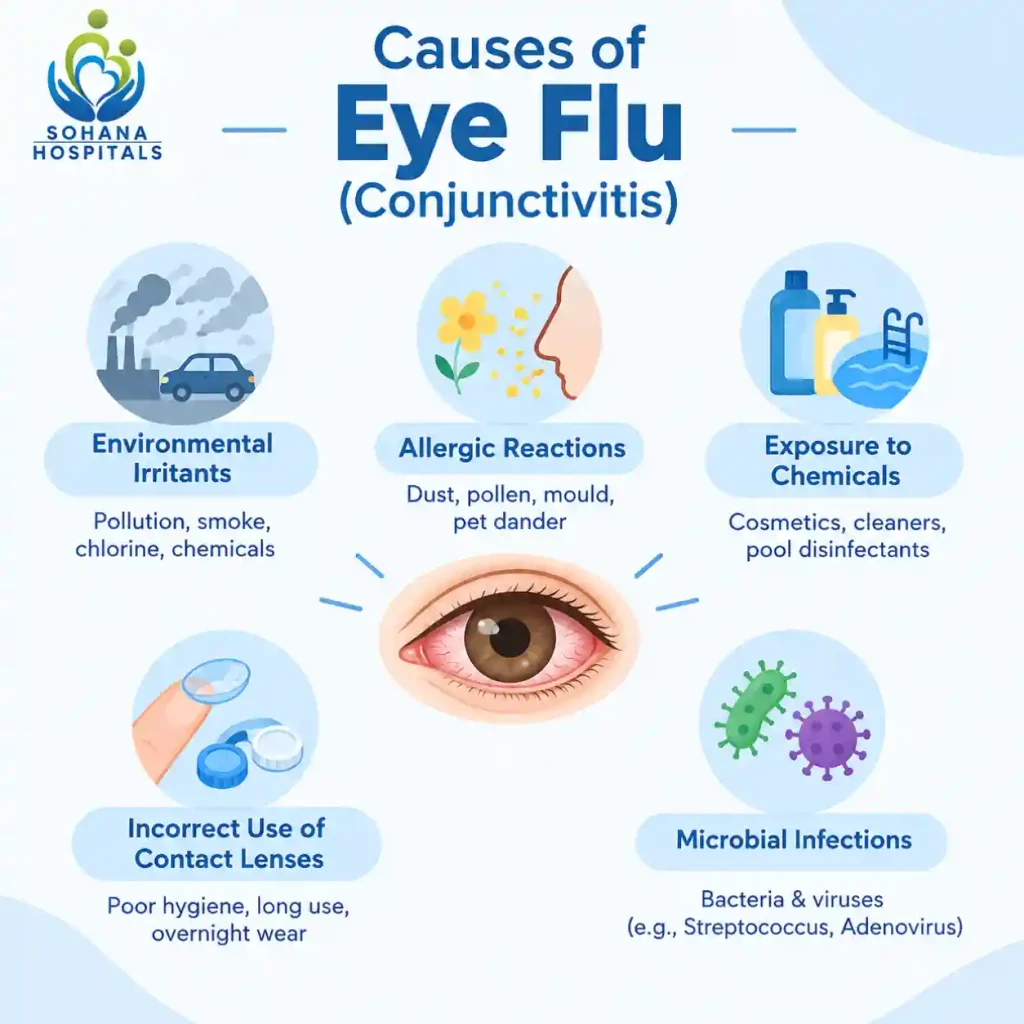
Environmental Irritants
When eyes get exposed to air pollution, smoke, chlorine (in swimming pools), or harsh chemicals present in the environment, eye flu may occur.
Allergic Reactions
When your immune system overreacts to allergens such as dust mites, pollen, mould, or pet dander, it may result in allergic conjunctivitis. This eye flu is not contagious and can be managed by avoiding allergens and using the right medications.
Exposure to Chemicals
Chemical conjunctivitis may result from exposure to chemicals found in cosmetics, household cleaners, and swimming pool disinfectants.
Incorrect Use of Contact Lenses
Proper hygiene is a must when using contact lenses; failing which, you may suffer from infections. Wearing contact lenses for long stretches of time, especially overnight, raises the risk of conjunctivitis. Additionally, lack of cleanliness and improper storage can lead to conditions like keratitis (corneal inflammation).
Microbial Infections
Some kinds of bacteria (e.g., Streptococcus pneumoniae, Staphylococcus aureus, and Haemophilus influenzae) and viruses (e.g., Adenoviruses, herpes simplex virus, etc.) can cause conjunctivitis. Such eye flu often has more severe symptoms.
What are Home Remedies for Eye Flu?
Here are some home remedies that may soothe your eyes and provide some relief from eye flu.
Eye Hygiene
- Do not touch or rub your eyes
- Do not splash water into your eyes
- Wash your hands frequently, especially when you come from outside
- Clean your eyes with a sterile cotton pad, and throw it after each swipe
- Gently clean your eyelids and eyelashes from the inner corner towards the outer edge.
- Throw each cotton pad after one use
- Do not share makeup, towels, and other personal belongings
Cold Compresses
- Advised in cases of allergic conjunctivitis
- Take a clean cold cloth and gently place it on your closed eye(s) for a few minutes
- Repeat several times a day
- Helps relieve itching and swelling
Warm Compresses
- Take a clean warm cloth and gently place it on your eye(s) for a few minutes
- Repeat several times a day
- May reduce irritation and swelling
Environmental Irritants
- Avoid dust, smoke, and other environmental factors
- Wear protective eyewear when outside or while swimming
Contact Lenses
- Avoid wearing contacts till you recover from eye flu (wear glasses instead)
- At other times, be particular about hygiene and storage of contact lenses
- Use fresh cleaning solution (avoid using tap water for lenses or lens cases)
What is the Medical Treatment for Eye Flu?
Home remedies may work when the infection is not serious. However, if the condition does not seem to improve within a few days, it may be necessary to seek medical attention. Depending on your symptoms, you may be prescribed:
Artificial Tears or Lubricants
- Easily available over-the-counter
- Can help reduce dryness and irritation and maintain lubrication in the eyes
- Often safe to be used several times daily
Antibiotic Eye Drops or Ointments
- Advised in cases of bacterial conjunctivitis
- Helps clear the infection
- Make sure you follow your eye doctor’s instructions regarding dosage and the number of days
Antiviral Medications
- Prescribed only in select cases
- Used for more severe viral infections (e.g., those caused by herpes simplex virus)
Antihistamines and Decongestants
- Prescribed for eye flu due to allergies
- Antihistamine eye drops or oral medications may help soothe eyes by alleviating the allergic response
- Decongestant drops can help relieve redness and swelling
Steroid Eye Drops
- Used in cases of severe ocular inflammation
- May help reduce swelling and pain
- Should not be used without a prescription
Pain Relievers
- Can be purchased over-the-counter
- Help manage pain due to eye flu
Conclusion
If you notice any of the symptoms, like redness, irritation, excessive tearing in your eyes, and suspect it to be eye flu, it is vital to start caring for your eyes immediately.
The goal should be to manage your condition while also preventing its spread. Do not touch your eyes, follow good eye hygiene practices, and if the symptoms are not too severe, you can start with home remedies for eye flu.
However, if the symptoms do not subside or continue to worsen, consult the eye doctor. It’s crucial not to self-medicate since any negligence can lead to complications.
Sohana Hospital provides comprehensive eye care for all kinds of simple and complex eye conditions, from routine eye tests and specs removal to retina and cornea care. Call +91 8725001333 to book your appointment and receive advanced, world-class eye care at affordable prices.