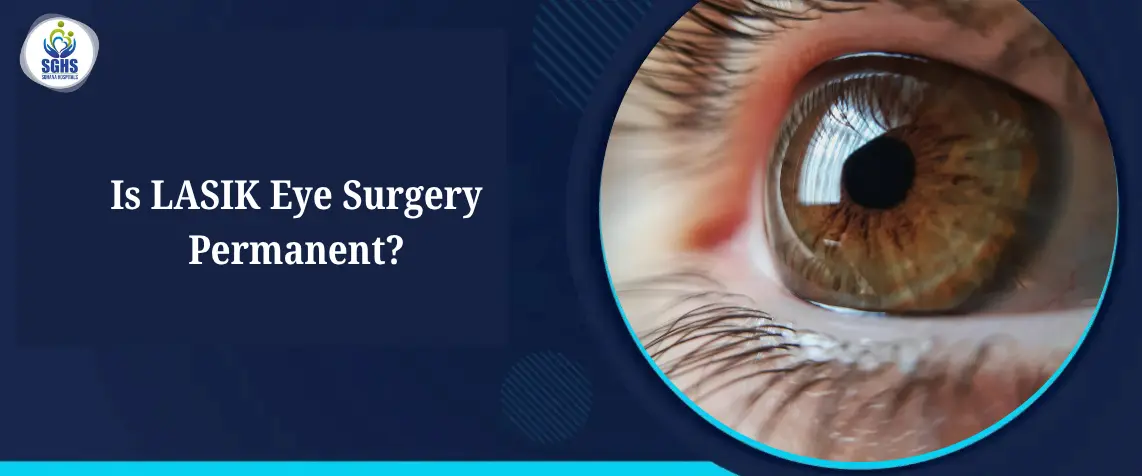
The effects of LASIK eye surgery are generally permanent for most people. Many achieve the standard 6/6 clear vision, and some report even better.
LASIK is a popular vision correction method, where the corneal tissue is reshaped to provide clear vision. This helps change the curvature of the cornea and reduce the eye power.
While the results of LASIK are mostly permanent for those who undergo the procedure, some patients may experience progression of their refractive error and subsequent blurry vision a few years after their surgery. Now, this is not to say that the results of LASIK are not permanent, but some patients may experience changes in their refractive error over time, which can lead to blurry vision after LASIK.
In most cases, the error is minimal and does not hamper the individual’s everyday life. In this blog, we will discuss the reasons why some people experience regression.
Read more on:
ToggleAge of the Individual at the Time of LASIK Surgery
The age at which you undergo LASIK eye surgery determines whether your eye power will come back or not. Generally, LASIK is recommended for individuals over the age of 18, as the eye power tends to stabilise by that time. A stable prescription is an important factor when determining LASIK eligibility.
However, for some individuals, this vision stabilisation may occur by the age of 24-25. Therefore, if that person undergoes LASIK at, let’s say, 19-20, they might run a risk of regression.
If LASIK is performed at a young age, future eye growth can cause the specs number to come back. This is why the best time to undergo LASIK is after the age of 21, when the eye power has been stable for more than a year.
Stable Eye Power
It is crucial to ensure your eye power is stable before you consider undergoing LASIK surgery. The stability of eye power ensures 2 things. First, that your eye is not changing in shape anymore, hence minimising the possibility of eye power coming back after surgery. Second, it also indicates that the eye is healthy and that no external factors such as hormonal changes or diabetes, etc., are impacting the eye power.
*Note: A comprehensive eye examination is still required to assess overall eye health and confirm your LASIK eligibility.
Thin Corneas
If your corneal thickness was on the borderline for LASIK qualification, you may have thin and weak corneas after the surgery. Subsequently, if you have low corneal thickness after surgery, your eyes may not be able to take the mechanical stressors (eye rubbing and certain other factors) and start to bulge out. This leads to changes in vision even after LASIK. Detailed corneal thickness and topography/tomography assessments are therefore important before LASIK.
| 👉 This is why it’s important to choose your LASIK surgeon wisely. Only a trusted and highly experienced surgeon will consider all factors like ample corneal thickness and good eye health, etc, before advising vision correction LASIK treatment. |
Natural Vision Decline with Age
If you underwent LASIK in your 20s and your vision starts to decline after 40 – this doesn’t mean that the results of your LASIK are not permanent. It means that your vision is declining as a natural part of ageing. Presbyopia is a common refractive error – it affects nearly everyone as they grow older. This makes it difficult to shift focus between distance and near vision or to see nearby objects clearly.
| 👉 LASIK does NOT guarantee you will not get presbyopia. Nearly everyone develops presbyopia, a natural decline in vision that occurs as the eye lens becomes less flexible with age. |
It is important to understand that LASIK or laser specs removal surgeries do not change the natural tendencies of our eyes. These vision correction procedures simply reshape the cornea to correct the existing refractive errors. However, LASIK/laser cannot prevent future age-related or other changes that may affect vision.
It is important to understand that blurry vision after LASIK does not always mean that the refractive error has regressed. It may have several causes, including residual or recurrent refractive error, natural progression of myopia, presbyopia, dry eye, etc.
For more information, visit Sohana Hospital – North India’s largest specs removal centre.
Our expert counsellors are ready to answer any queries you might have before starting your vision correction journey. Our highly experienced LASIK surgeons and dedicated support staff ensure you get a smooth specs removal experience. Pre-LASIK screening, one-on-one consultations, personalised treatment plans, regular follow-ups, and detailed medicine routine advice – we ensure you get the highest quality care at Sohana Hospital!