🗓️ Updated on: September 10, 2026
If your eye doctor tells you that you have cylindrical eye power or astigmatism, it means you have a refractive error. This is when vision becomes unclear. In astigmatism, more specifically, vision tends to get blurred or distorted at all distances.
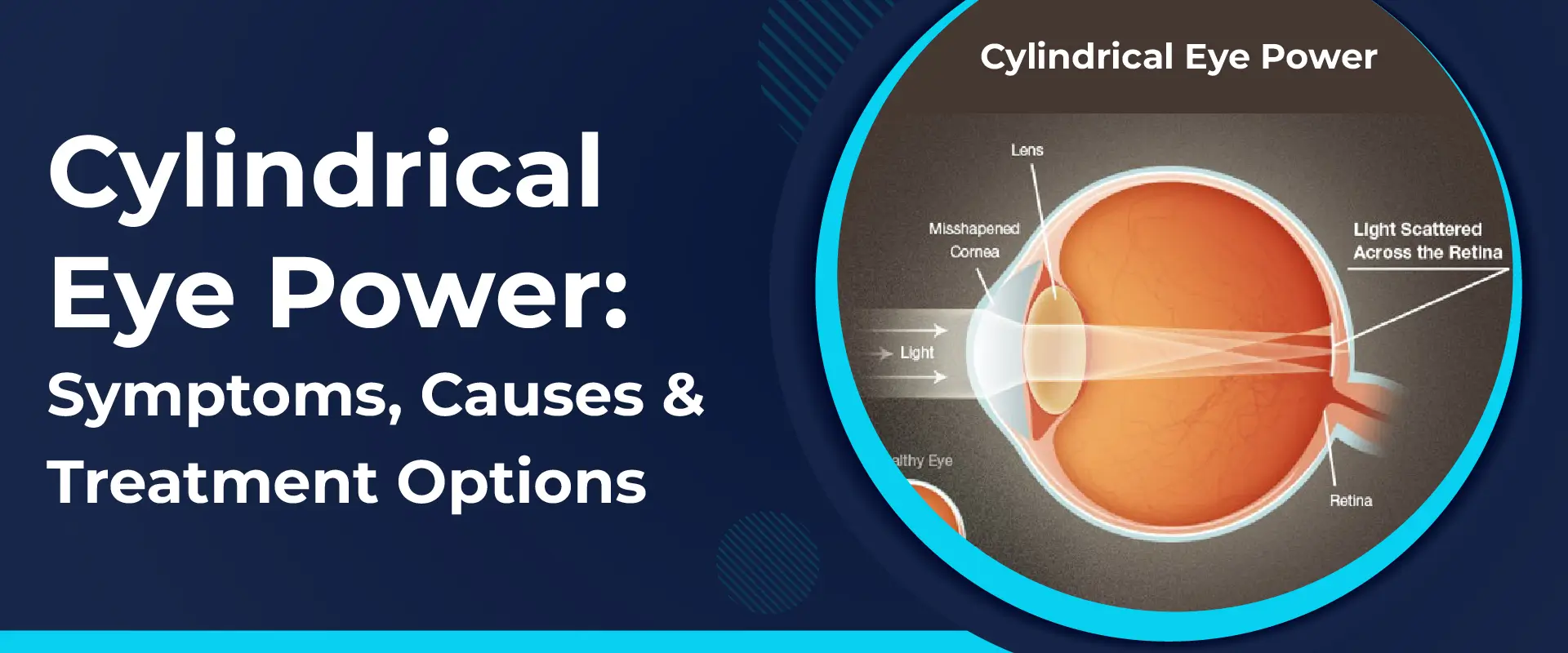
You develop astigmatism when your cornea (the outermost, clear part of the eye) or natural eye lens has an irregular shape. This irregular shape impacts how light enters the eye. Instead of focusing directly on the retina, it bends unevenly, forming multiple focal points that are spread across different locations inside the eye. This process results in distorted images (unclear vision) being registered by the brain.
| Retina: The light-sensitive layer of tissue at the back of the eye, responsible for transmitting signals to the brain for image perception. |
This distorted vision makes several everyday tasks such as driving (especially at night), reading, etc., seem challenging. Some common questions most individuals have are, “What causes cylindrical power?” and “How to manage it?”
In this blog, we are going to delve into these questions to find out the answers, so that you can be better informed about the condition, its symptoms, causes, and possible treatment/management options.
What is Cylindrical Power in Eyes?
Let’s start with an overview:
A normal cornea is slightly curved and even, which allows light to focus at one point on the retina, providing clear vision. However, if you have a cylindrical eye number, the cornea lacks a proper round shape. It resembles a rugby ball.
The result? Instead of focusing on one point, light focuses on multiple points, resulting in visual distortions. If you are aware of the cylindrical power symptoms, you can identify the issue early, consult an eye specialist, and get timely treatment. This will help you improve your vision and lower eye strain.
This is not to be confused with spherical eye power, which deals with myopia (nearsightedness) and hyperopia (farsightedness).
| 💡DID YOU KNOW? An individual can have a cylindrical power, a spherical power, or even both. |
Fill details to get actual cost of cylindrical specs removal
Your message has been sent
How to Understand a Cylindrical Power Prescription?
| TERM | MEANING |
| SPH or spherical | Degree of correction required for shortsightedness (minus eye power) or longsightedness (plus eye power) |
| CYL or cylindrical | Degree of correction required for astigmatism (can be either + or -) |
| AXIS | The angle at which the correction sits (can range between 0 and 180°) |
| ADD | Additional near power required (in case of presbyopia) |
What are Some Common Cylindrical Power Symptoms?
Cylindrical power symptoms may vary from person to person depending on how severe their condition is. Identifying these symptoms helps get an accurate diagnosis and enables timely management of the refractive error.
Let’s have a look at some common signs and symptoms of astigmatism:
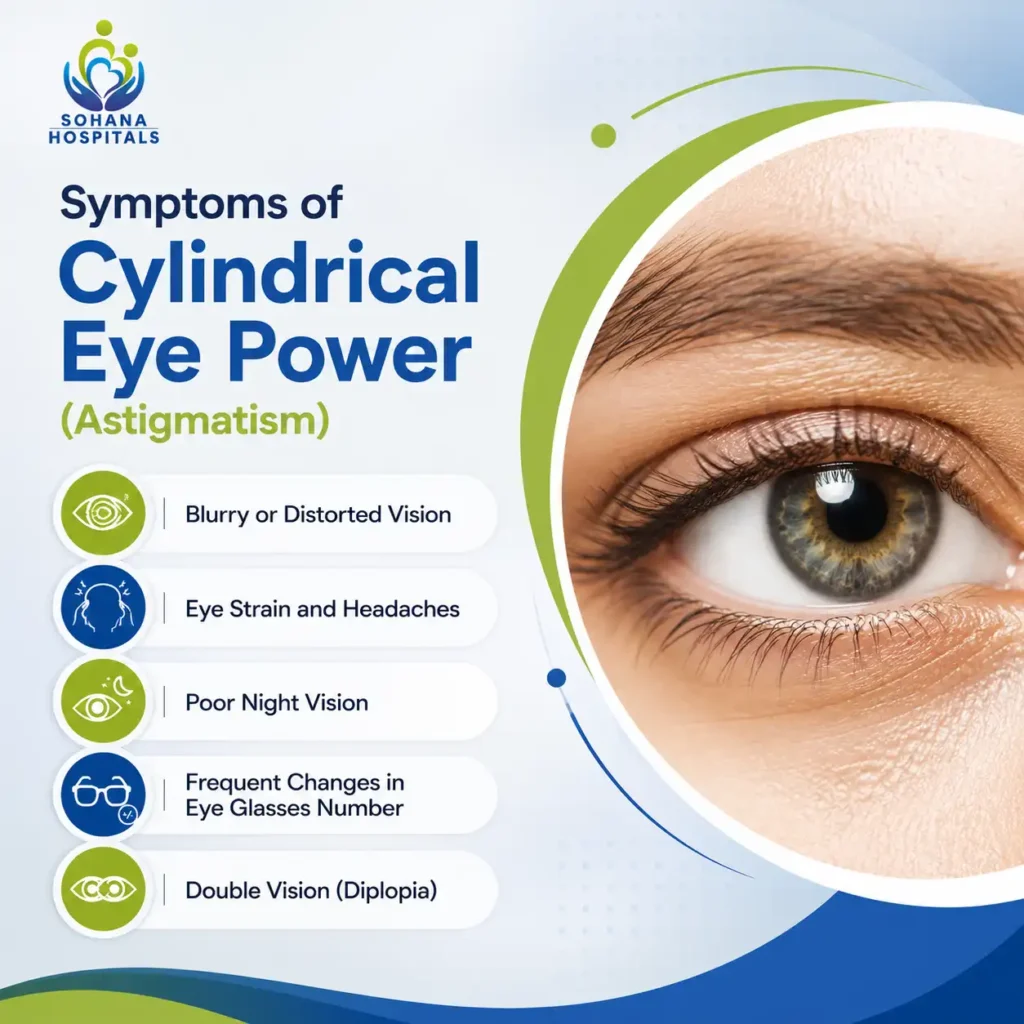
Blurry or Distorted Vision
Astigmatism differs from other refractive errors such as myopia (nearsightedness) and hyperopia (farsightedness). It distorts your vision instead of just making it blurry, meaning images look wavy, skewed, stretched, or hazy – at close as well as far distances.
Eye Strain and Headaches
When you keep straining your eyes to see clearly, you may tend to suffer from headaches. Also, your eyes may feel tired as they are constantly overworked during everyday tasks. This is more so after spending a long time reading or using a screen.
Poor Night Vision
You may experience more visual distortion and sensitivity to glare at night or in dimly lit spaces. You may also experience excessive reflections, halos around lights, and poor sensitivity to contrast. This makes night driving feel challenging and hazardous.
Frequent Changes in Specs Number
If there are frequent changes in your refractive error, it may be because of these reasons – increasing astigmatism, the development of keratoconus, changes in corneal shape, or some other eye condition.
Double Vision (Diplopia) or Overlapping Images
In cases of high astigmatism, the patient may see overlapping images because light does not focus properly on the retina. Double vision, while not very common in astigmatism patients, can make it hard to focus on the objects in front of them.
Cylindrical Power in Children
Cylindrical power in children looks different from that in adults. Infants and toddlers cannot properly identify vision problems on their own, let alone communicate them.
| 🚨 IMPORTANT: Uncorrected astigmatism (cylindrical power) in children can lead to the development of amblyopia (lazy eye). (via NIH)[1] |
This is why it’s important for parents to watch out for some warning signs and symptoms that may be an indication of eyesight problems in kids:
Squinting
If your child has started squinting at the TV, while reading, or at school, they might be facing vision problems like astigmatism.
Sitting too close to the TV
If your child needs to sit too close to the TV at home or the blackboard at school, and their vision is still slightly blurry, they might need a cylindrical power to correct their vision.
Difficulty reading
Trouble while reading storybooks or textbooks may not always be a linguistic issue. Sometimes, children have a hard time focusing on the words in front of them due to distorted (uncorrected) vision.
Frequent eye rubbing
This is a major warning sign. Excessive eye rubbing is often due to unclear vision. Because children cannot comprehend why their vision appears blurry at all distances, they may try to “rub the blur away”. But this can harm their corneas. It is vital for parents to identify such signs and consult a paediatric eye doctor at the earliest.
| 👁️ Regular eye check-ups are crucial for maintaining good eye health in children. If refractive errors like astigmatism, myopia, and hyperopia are caught early, their progression can be significantly delayed or slowed down. |
What are the Causes of Cylindrical Power in Eyes?
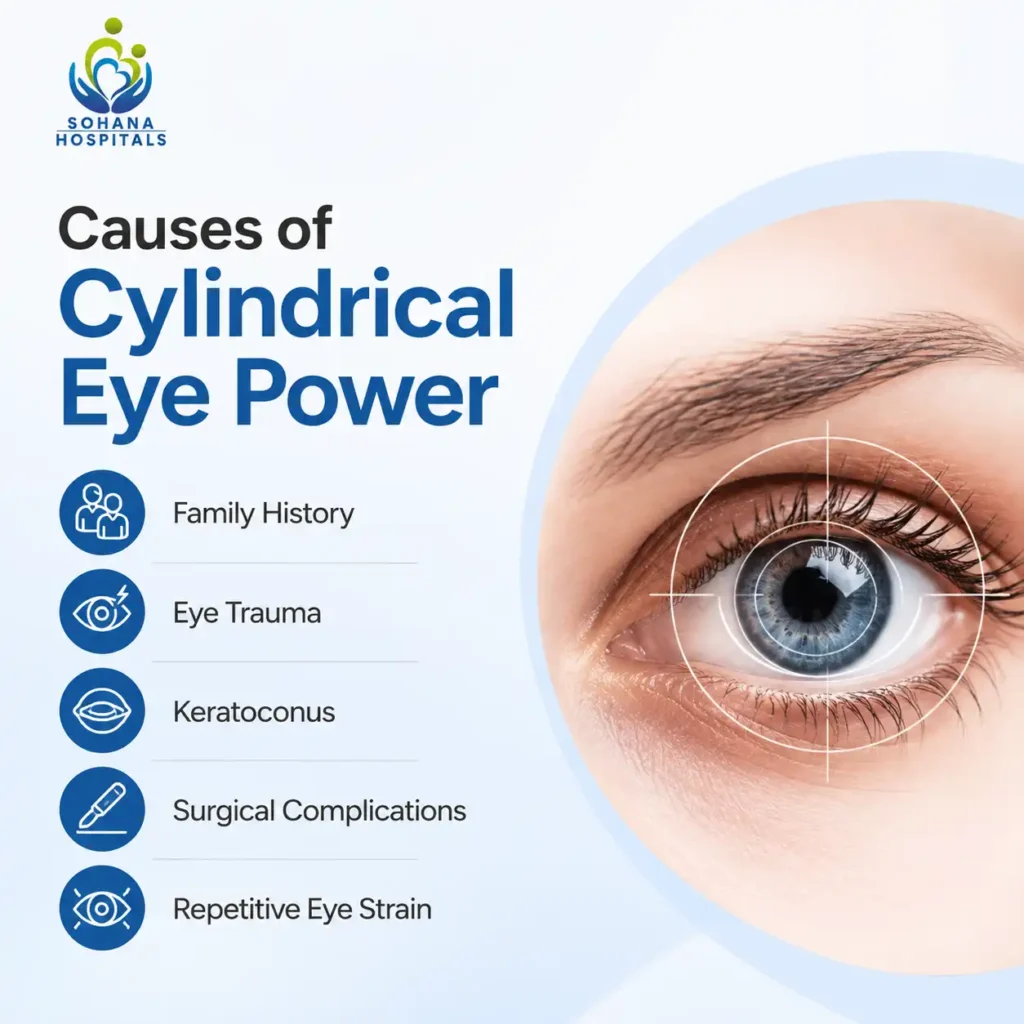
The primary cause of cylindrical power or astigmatism is an irregularly & unevenly shaped cornea; this causes improper light refraction. Here are some causes that lead to irregularly shaped corneas:
Family History
If one or both biological parents have had astigmatism, the child may have a high probability of developing the same. Genetics hugely influences the shape of the cornea, which is why astigmatism runs in families.
Eye Trauma
Eye injuries can modify the cornea’s shape, resulting in cylindrical power. Corneal curvature may change due to physical injuries, accidental pokes, or post-surgery complications.
Keratoconus
This is a progressive eye condition that causes thinning of the cornea and makes it bulge out in a conical shape. Keratoconus intensifies over time, and if not treated promptly, it can result in severe astigmatism.
Surgical Complications
Sometimes eye procedures, such as LASIK or cataract surgery, may be the reason behind cylindrical power – if the cornea does not heal evenly. In such cases, additional corrective measures may be needed. For instance, further surgeries or toric lenses.
Repetitive Eye Strain
Although eye strain itself does not cause astigmatism, it can exacerbate symptoms and aggravate discomfort. Poor lighting and too much close-up work may be contributing factors to minor prescription changes over time, but they are not clinically proven causes.
What are Cylindrical Power Treatments & Can It Be Corrected Naturally?
Like other refractive errors, cylindrical eye power also cannot be ‘cured’ or corrected naturally with home remedies. But there are several other corrective measures that can give you clear vision.
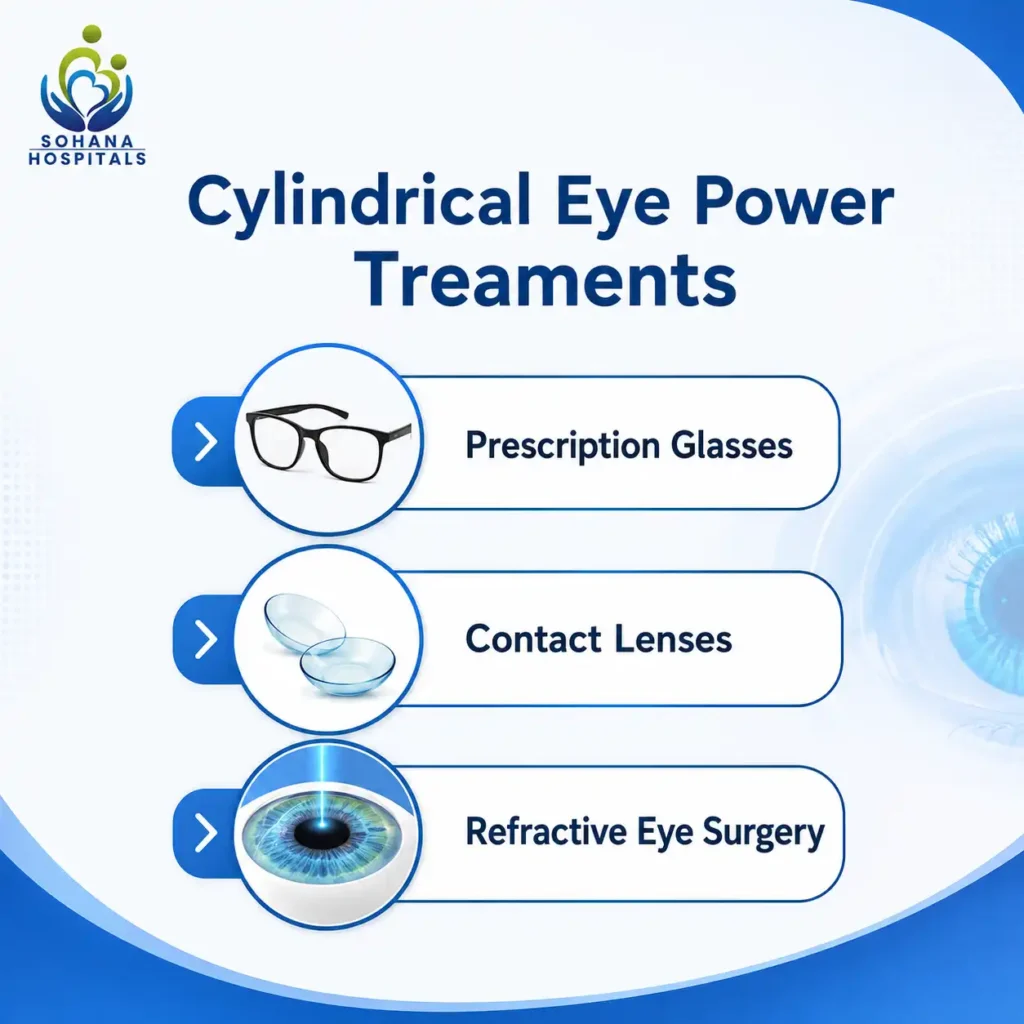
- Eyeglasses: Once you have a professional diagnosis from a trusted eye doctor, they will likely prescribe you a pair of eyeglasses with toric lenses to make everyday life functional and easy. These prescription glasses are custom-made according to your exact eye power. They are designed to rectify cylindrical power by making up for the unevenness in the curvature of the cornea. Specs are a comfortable solution to manage astigmatism.
- Contact lenses: If you do not wish to wear spectacles or deal with the cleaning & storage hassles, you can opt for custom-made contact lenses. There are many different types of lenses – consult your doctor to know more about which ones would be ideal for your eyes. You can choose between soft and rigid gas-permeable toric lenses. Toric lenses rectify cylindrical power in a better way as they adjust focus at different angles to enable you to see properly. This feature is not present in standard spherical lenses.
- Refractive surgery: A more permanent option is refractive surgery. LASIK, surface ablation, flapless laser eye surgery, or lens implants can help you achieve clear vision without eyeglasses or contact lenses. If your vision has been stable for a year, you have good eye health with no underlying conditions, and you meet all necessary eligibility requirements, you can get your cylindrical power corrected with refractive surgery.
The Bottom Line
Astigmatism is an eye condition that gives distorted or blurred vision at all distances. Cylindrical eyesight causes can range from genetics, eye injury, other eye conditions, and complications from eye surgeries. The good news is that today we have several treatment options to help you get rid of astigmatism. You can wear spectacles or contacts, or choose from a range of refractive eye surgeries.
Sohana Eye Hospital, a trusted eye hospital in Chandigarh that has been restoring clear vision in eye patients since 1995, provides all cylindrical power treatments – from prescription eyewear and contact lenses to modern refractive eye surgeries. Experienced and highly qualified eye specialists, the latest diagnostic & surgical technologies, and world-class infrastructure – get all at affordable prices.
FAQs Related to Cylindrical Eye Power
What does cylindrical power mean?
Cylindrical power in eyes, also known as astigmatism, causes blurry and distorted vision at all distances (near & far). This happens when the outer layer of the eye (cornea) is unevenly shaped. It causes the light entering the eye to hit multiple focal points inside the eye instead of falling directly on the retina.
Is cylindrical power harmful?
Generally, no. We cannot say cylindrical power or astigmatism is harmful. Cylindrical power just means the eye’s surface is shaped a bit differently (elongated instead of spherical), which causes blurry or distorted vision. With the right treatment, you can see clearly and avoid any long-term damage. However, if left untreated for long, it can lead to amblyopia or even other eye conditions.
Does cylindrical power increase with age?
There can be some changes with age, especially during childhood or as the eyes naturally change in adulthood. But it does not mean that things will always get worse. In fact, many people have stable cylindrical power for years. Regular eye check-ups are necessary to keep track of your cylindrical power.
Why does cylindrical power increase?
Your cylindrical power may continue to increase due to ongoing changes in the corneal shape. This progression can, however, be delayed if timely management strategies are employed.
Does screen time cause cylindrical power?
While excessive screen time can account for eye fatigue and strain, it does not directly cause or contribute to the development of cylindrical power. However, it’s still advised to limit your daily screen time as much as possible, because if you already have astigmatism, prolonged screen exposure can sometimes worsen symptoms like eye fatigue & headaches, etc.
Can cylindrical power be cured?
Cylindrical eye power cannot be cured, per se. But the refractive error can be corrected through various management options such as prescription glasses, contact lenses, and refractive eye surgery. Taking care of your eye health by consuming a nutritious diet may also help support stable vision.
Can LASIK treat cylindrical power?
Yes, LASIK eye surgery can correct cylindrical power. It is an effective specs removal treatment for astigmatism. You will need to undergo a series of screening tests. If you meet the eligibility criteria, LASIK can help you get clear vision without spectacles or contact lenses.
Can eye exercises cure cylindrical power?
No. Eye exercises cannot cure cylindrical power because it is the shape of the cornea, not weak eye muscles, that causes cylindrical power. However, specific eye exercises may help reduce eye strain.
What is the difference between spherical and cylindrical power?
The main difference between the two is that spherical power is used to correct nearsightedness (myopia) and farsightedness (hyperopia), while cylindrical power deals with astigmatism.
Is it necessary to wear glasses for cylindrical power?
Yes. Except for mild astigmatism that does not disturb vision, some kind of treatment is essential to allow the patient to see clearly and comfortably. Glasses are an easy solution. You may also try wearing contact lenses.
These days, you also have the option of refractive eye surgery. After surgery, you may no longer need to wear any specs or contacts. However, without treatment, you may experience headaches, strained eyes, or difficulty focusing, especially while reading and driving.
Reference Sources:
- National Institutes of Health. Development and Treatment of Astigmatism-Related Amblyopia. https://pmc.ncbi.nlm.nih.gov/articles/PMC2706277/#:~:text=uncorrected%20astigmatism%20during%20early%20development%20can%20result%20in%20amblyopia – June 2009